It's the water heater (or the corner it sits in)
How old is too old for a basement water heater?
Answered by the column’s editors · · about 5 minutes to read
How long do water heaters last? A traditional tank usually gives 10 to 15 years. Past that, it's living on borrowed time, especially in a finished basement where a sudden leak would do real damage.
There's no expiration date stamped on the jacket, and a 16-year-old heater can still be making hot water this morning. The question is less "is it dead?" than "how much risk are we carrying by waiting?"
The U.S. Department of Energy puts the life of a traditional tank heater at 10 to 15 years, compared with more than 20 for tankless units. That range is a good planning tool. Once your tank is inside it, start shopping on your schedule rather than the heater's.
How do we tell how old our water heater is?
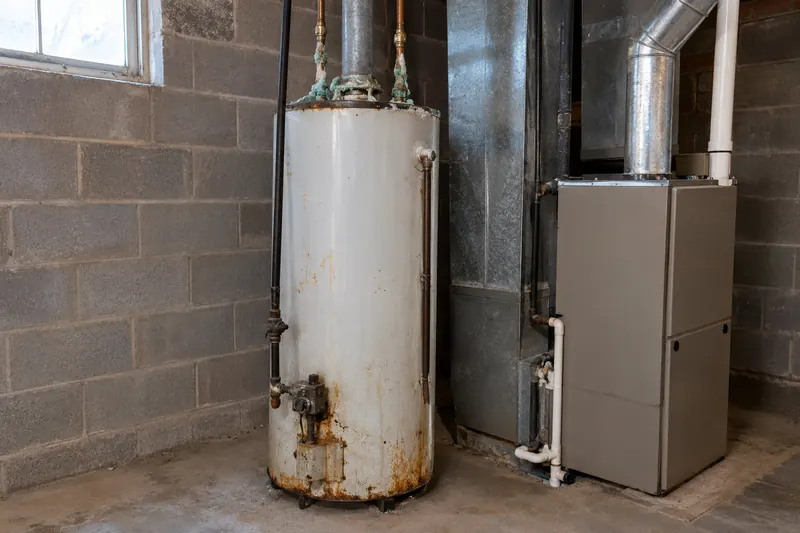
Start with the rating label on the side of the tank. Some labels show a manufacture date outright. Many encode it in the serial number, and every maker uses its own code, so look up the format on the maker's website or in the manual rather than guessing. An install sticker or a WSSC inspection sticker on a gas unit can also give you a rough date.
If the paperwork came with the house, check the home inspection report too. Inspectors often note the heater's age. If you're house hunting, the water heater belongs on the list of basement checks before you buy.
What actually wears a tank out?
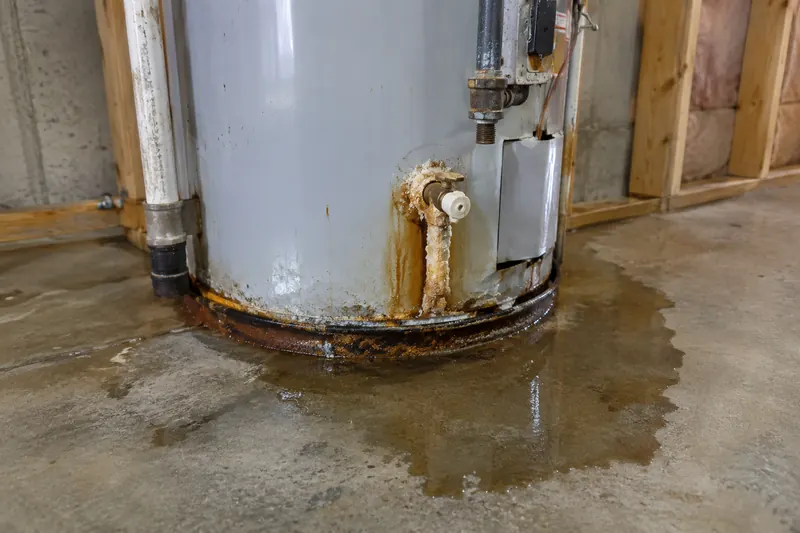
Corrosion, mostly. The steel tank is glass-lined, and a sacrificial anode rod corrodes so the tank doesn't. When that rod is used up, A.O. Smith says, the tank starts to corrode and eventually develops a leak. That's why the end usually shows up as a drip at the base, which we cover in what a leak from the bottom means.
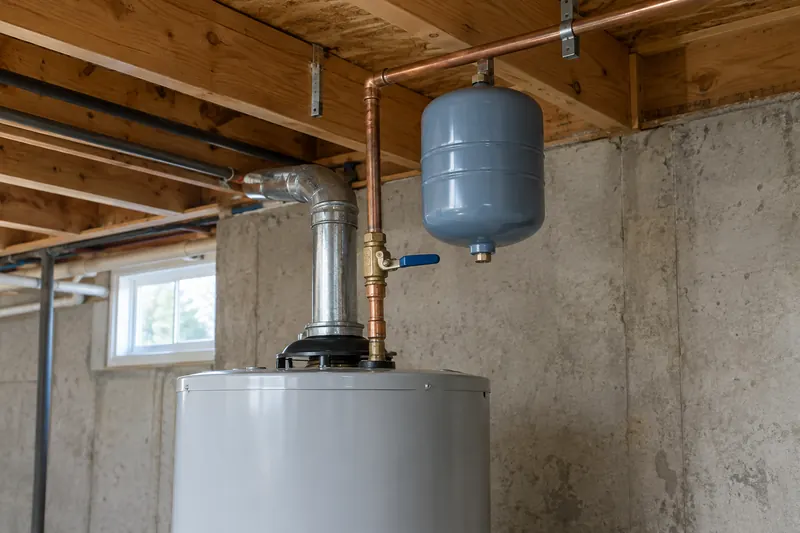
Pressure is the other wear factor. In a closed system without expansion control, A.O. Smith warns that thermal expansion can cause early tank failure. If your plumber has mentioned it, read why an expansion tank matters.
Maintenance helps, but intervals vary by model. Follow your own heater's manual for flushing and anode checks rather than a one-size rule.
Does our hard water shorten its life?
It can. The U.S. Geological Survey says that when hard water is heated, calcium carbonate scale can form, shortening equipment life, raising heating costs and lowering the efficiency of electric water heaters.
How hard is the water here? It depends on which WSSC Water plant supplies you. WSSC's 2024 tap water analysis averaged 140 mg/L from the Potomac plant and 64 mg/L from the Patuxent plant. By USGS's scale, 140 mg/L is "hard" and 64 mg/L is "moderately hard." Outside WSSC, check your own utility's report or test a well.
What are the signs it's time to replace it?
| Sign | What it suggests |
|---|---|
| Age past 10–15 years | Inside or beyond DOE's typical life range |
| Rust or seepage at the base | Tank corrosion; not repairable |
| Rusty hot water only | Possible tank or anode trouble; have it checked |
| Relief valve that keeps dripping | Pressure or temperature problem; a licensed pro should inspect |
| Repeated repairs on an old unit | Money may be better spent on a replacement |
No single sign is a verdict, but two or three together on a heater already in that age range usually are.
What does replacing it involve here?
Two things decide it: whether the heater burns gas, and which county you're in. For Montgomery and Prince George's homes, WSSC's code exempts electric water heater swaps from a permit when no concealed piping is changed. Gas water heater replacement needs a WSSC-licensed plumber, a permit and an inspection. Frederick County lets a licensed plumber replace a like-kind heater in an owner-occupied home without a permit, though gas appliances still need one. In Baltimore County, plan on a permit no matter which fuel. Not sure who covers you? See who issues plumbing permits.
A planned replacement is also the cheapest moment to add a drained pan and check expansion control.
The bottom line
Plan on 10 to 15 years from a tank water heater, fewer if it's working against hard water or unchecked pressure. Once yours is in that window, especially in a finished basement, replace it on your own timeline, with a licensed plumber and a permit wherever gas or your county requires one.
Readers also ask
Is a 20-year-old water heater dangerous?
Not automatically, but it's well past DOE's typical range, so a leak is more likely. Make sure the relief valve pipe is intact and get a licensed plumber's opinion.
Do tankless water heaters last longer?
Generally, yes. DOE says more than 20 years, and ENERGY STAR gives about 20.
Should we replace a working heater before it fails?
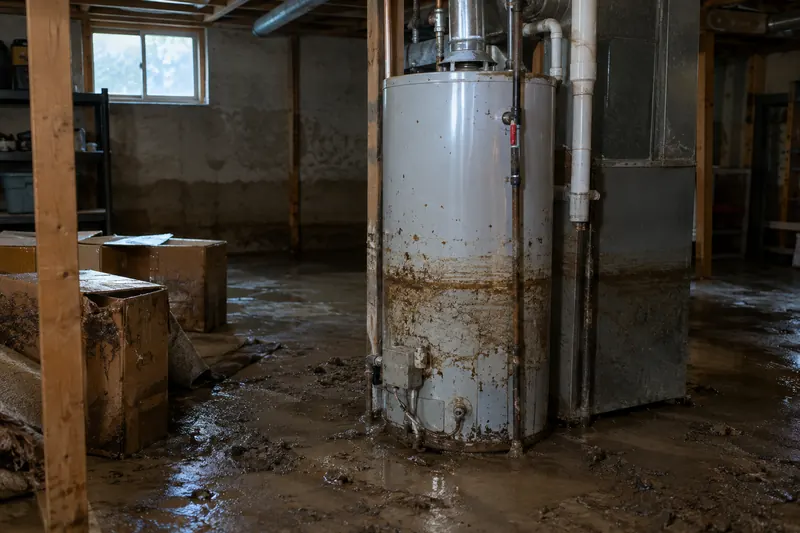
In a finished basement, many owners do once it's in the 10 to 15 year range, because a planned swap avoids flood cleanup.
Does a softener make a water heater last longer?
It reduces hardness scale, but A.O. Smith warns softened water can shorten tank life by wearing the anode faster. Follow the heater's manual on anode checks.
Which WSSC plant supplies our house?
It depends on your location. WSSC Water can tell you, and its water quality reports list results for both plants.
Where this answer comes from
- U.S. DOE, Building America: water heater life, tank versus tankless
- A.O. Smith: manual notes on anodes, softened water and expansion
- WSSC Water: 2024-25 tap analysis report (archived copy)
- U.S. Geological Survey: Hardness of Water
- WSSC Water: answers on gas appliance permits (archived copy)
- ENERGY STAR: tankless water heater life