Something's backing up or smells
Should we get a backwater valve, and who can put one in?
Answered by the column’s editors · · about 5 minutes to read
A backwater valve is worth it if your basement fixtures sit below the next upstream sewer manhole cover; the code then requires one, and a licensed plumber installs it under a permit.
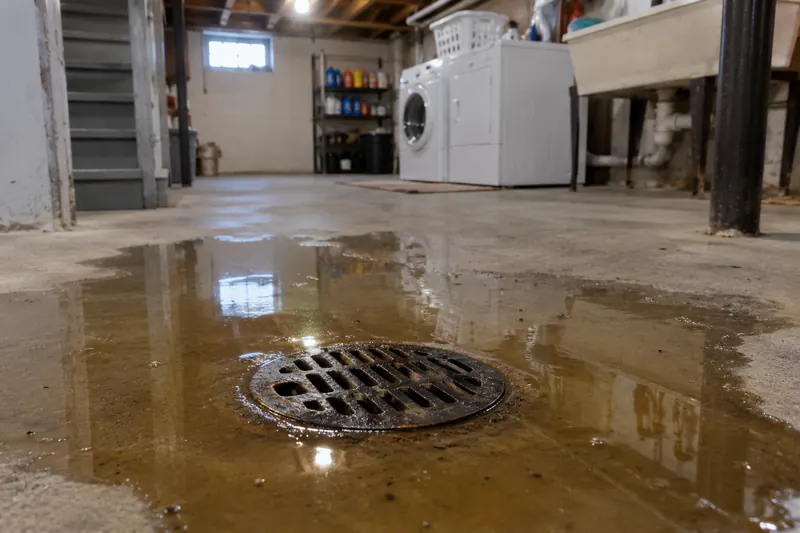
Short answer: if sewage has ever come up through your floor drain, ask a plumber to check. A backwater valve is a one-way gate in the building drain. Wastewater leaves normally, but when the sewer in the street fills and pushes back, a flap closes so it can't come up through your lowest drains.
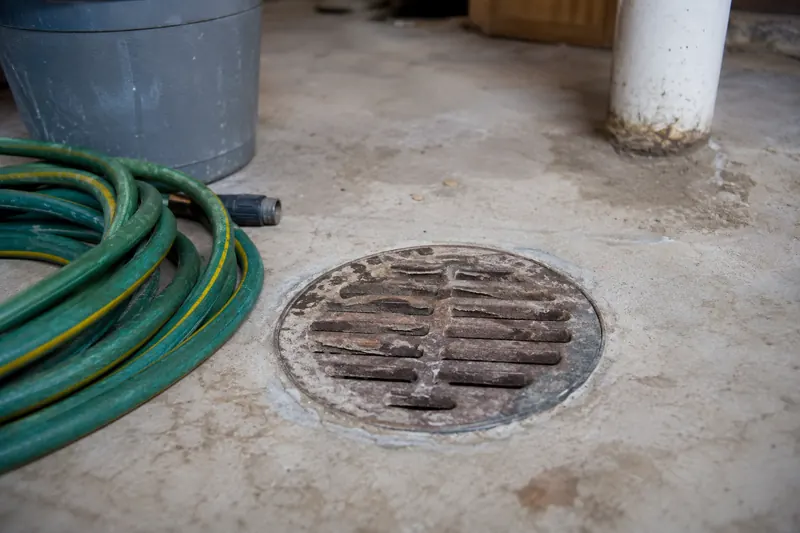
Why the basement? Water seeks the lowest level, so when the sewer rises above your basement drains, NDSU Extension explains, those drains back up first. The valve sits between those fixtures and the street.
It isn't a cure-all: it does nothing for groundwater seeping through walls or rain pouring into a window well; that's a different fix, covered in water on the floor when the sump pit is dry.
When does the code require a backwater valve?
The plumbing code ties it to elevation. If fixtures sit on a floor below the rim of the next upstream sewer manhole cover, they must be protected by a backwater valve in the building drain. In Montgomery and Prince George's counties, WSSC Water's 2024 Plumbing and Fuel Gas Code uses that rule and counts manholes on private sewers as well as public ones. It took effect December 1, 2025.
Fixtures above that manhole level generally shouldn't drain through the valve, which keeps upstairs bathrooms working when it closes, though existing buildings get some leeway. Outside WSSC territory, your county's permit office applies its own code; see who issues plumbing permits.
Who can put a backwater valve in?
A licensed plumber, under a permit. The job means cutting the basement slab and opening the building drain. In WSSC territory, most plumbing work goes to a WSSC-licensed plumber or gasfitter, and the homeowner permit excludes below-grade piping deeper than 4 feet.
Before you sign, ask which fixtures sit below the upstream manhole, which will drain through the valve, and where the access cover goes. Then look up the plumber's license.
What upkeep does it need?
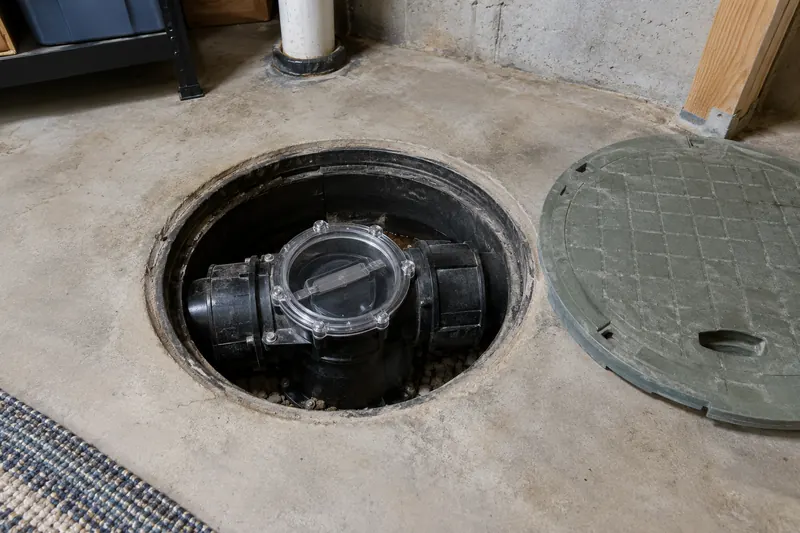
The code requires access to the working parts for service and repair. WSSC goes further: the access cover must carry a permanent label warning not to cover it with carpet or tile, and a tag at the main water valve must show where the backwater valve is. A valve you can't reach is a valve nobody cleans.
NDSU says to inspect a check-type valve every year for debris. A township in Ontario (not Maryland) lays out a sensible routine: remove the cleanout cap, look for debris on and under the flap, flush it, check the O-ring, and make sure the flap swings freely (St. Clair Township).
A yearly backwater valve check
- Put on rubber gloves and eye protection.
- Lift the labeled access cover off the valve pit.
- Remove the clear inspection or cleanout cap.
- Look for debris on the valve body and on and beneath the flap.
- Flush it clean and check the O-ring for cracks.
- Make sure the flap swings freely, then refit the cap and cover.
What happens while the valve is closed?
Your house can't drain through it. St. Clair Township tells residents not to shower, flush, or run the washer or dishwasher until the gate reopens. Go easy on water until the street sewer drops.
Toronto (again, not Maryland) allows a full-port valve that sits open until a surge, and it bans valves designed to sit closed (City of Toronto). NDSU describes a manual knife or slice valve that, once closed, blocks flow both ways. The video below, from a Connecticut sewer utility, shows the flap closing; its install program is Hartford-only.
| Option | What it does | Who does it |
|---|---|---|
| Normally open backwater valve | Flap shuts on its own when the sewer pushes back | Licensed plumber, with a permit |
| Manual knife (slice) valve | Blocks flow both ways once you close it | Licensed plumber, with a permit |
| Floor-drain backflow plug | A ball or float seals one drain against backflow | Often the homeowner |
| Sump pump | Moves groundwater, not sewage | Separate system entirely |
Will anyone help pay for a backwater valve?
In a few places. DC Water reimburses up to $6,000 for a backwater valve, but only for DC properties with a documented backup from the July 1, 2012 or September 10, 2020 storms. DC's FloodSmart Homes pilot lists sewer backflow prevention valves among its upgrades, again for DC homes.
In Maryland, Montgomery County says it doesn't offer the kind of financial help Rockville does. Rockville runs its own flood-mitigation reimbursement inside city limits, so check its list of eligible work. For every program we found, see help paying for flood fixes.
The bottom line
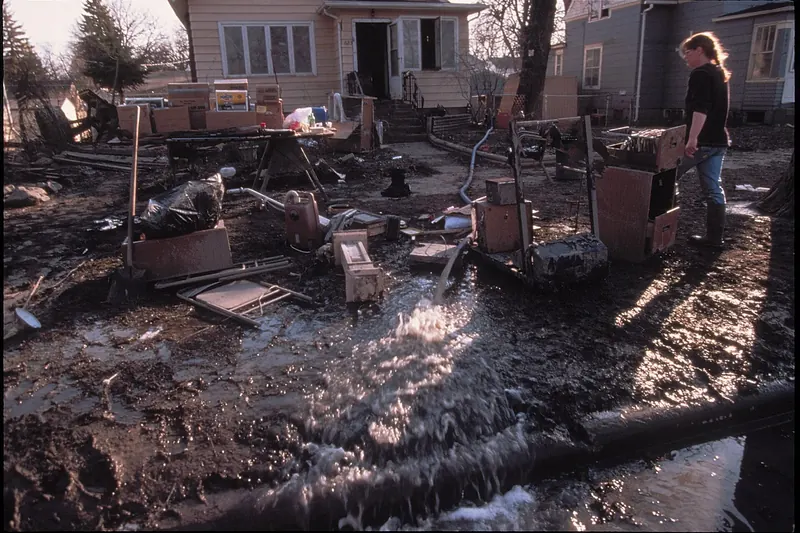
If your basement fixtures sit below the next upstream manhole, the code already calls for a valve, and a past backup is strong evidence you need one. Hire a licensed plumber with a permit, keep the access cover reachable, and check it every year. If sewage is already on the floor, start with the safe cleanup.
Readers also ask
Can we just plug the basement floor drain instead?
NDSU suggests floor-drain plugs with a built-in ball or float for homes without a backwater valve; they block backflow but still let water drain down. They protect one opening, so other basement fixtures stay exposed.
Does a backwater valve stop water seeping through the walls?
No. It only stops sewage flowing back up the drain. Seepage and groundwater are sump pump and grading problems.
Can we put tile or carpet over the access cover?
Not in WSSC territory. The code requires a permanent label on the cover saying not to cover it with permanent flooring such as carpet or tile.
Is a backwater valve the same thing as a backflow preventer?
No. A backwater valve protects your drains from the sewer. A backflow preventer protects the drinking water supply, and in WSSC territory every testable one must be tested each year.
Will the upstairs toilets still work when the valve closes?
Only if they don't drain through it. In new work the code keeps fixtures above the manhole level off the valve, but older setups vary, so ask your plumber which fixtures are on it.
Where this answer comes from
- NDSU Extension: AE1476, home drains and backwater valves
- WSSC Water: backwater valve rules in the 2024 code (archived copy)
- WSSC Water: licensed-work rules for homeowners (archived copy)
- St. Clair Township, Ontario: backwater valve upkeep
- City of Toronto: backwater valve permits
- DC Water: backwater valve rebate
- DC DOEE: FloodSmart Homes
- Montgomery County: flooding resident portal