Something's backing up or smells
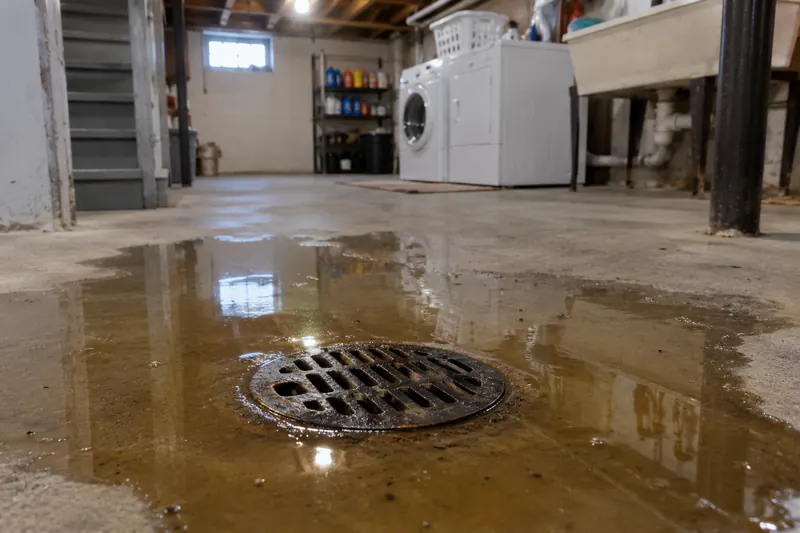
Sewage backed up into the basement. How do we clean up safely?
Answered by the column’s editors · · about 5 minutes to read
Sewage backup cleanup is a job many homeowners can do safely, as long as the power is off, you're geared up, kids and pets stay out, porous things go, and hard surfaces get washed and then disinfected.
Here's the thing about a sewage backup: the first hour is a safety problem, not a plumbing one. Raw sewage carries bacteria, protozoans and other pathogens that can make people seriously ill, and a wet basement may hold live wiring. Order matters more than speed.
A small backup onto bare concrete is usually manageable with the right gear. One that soaked carpet, drywall or a finished room is worth handing to a cleanup company, and the cause needs a plumber either way; why sewage comes up through the floor drain explains the usual culprits. First, stop running water so you don't add to the mess.
Is it safe to walk down there yet?
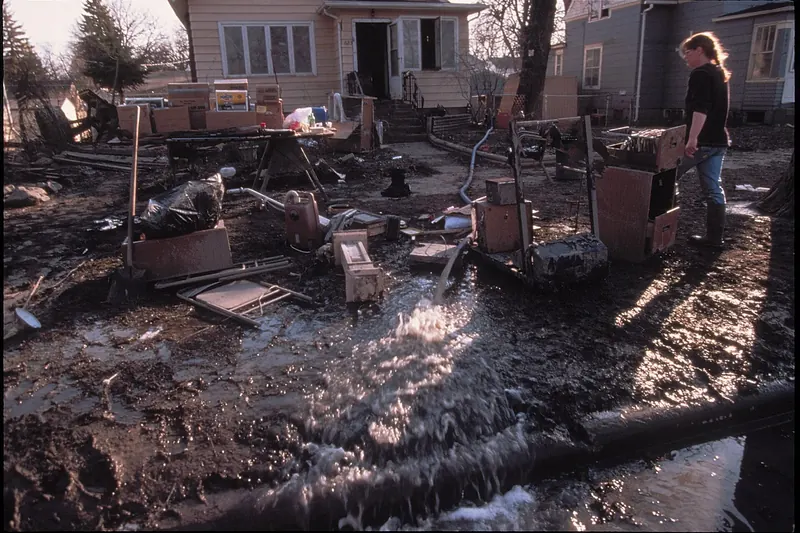
Not until you know the electricity is off. FEMA puts it bluntly: don't enter a flooded basement without being sure the electricity is off. If the breaker panel is in the basement, or reaching it means standing in water, don't try. Call your electric utility and ask them to cut power, or have an electrician handle it.
The CPSC warns against touching any wet appliance that's still plugged in. If the furnace or a gas water heater sat in the water, read what to do with a flooded gas water heater before anyone relights anything.
What should we wear for sewage cleanup?
The CDC's list when sewage is involved is rubber boots, rubber gloves and goggles. Add long pants and sleeves; EPA also suggests rubber gloves, pants and sturdy shoes for anything floodwater touched. Cover cuts before you start.
Keep children and pets away until the job is finished, and keep kids away from toys that sat in the water until they've been disinfected.
What has to be thrown out?
This is the part people resist. Anything porous that sewage soaked into can't be reliably disinfected, so it goes. CDC says to discard drywall and insulation touched by sewage or floodwater, and to throw away things you can't clean or dry quickly, like carpet, padding, rugs and mattresses.
Photograph everything before it goes to the curb, and keep receipts. Insurers, utilities and city programs all ask for proof.
| Item | What to do | Why |
|---|---|---|
| Drywall and insulation sewage touched | Cut out and discard | CDC says to remove and discard it |
| Carpet, padding and rugs | Discard | They can't be cleaned or dried quickly |
| Upholstered furniture and mattresses | Discard | The stuffing holds contamination |
| Concrete floor, tile, metal and sinks | Wash, rinse, then sanitize | Non-absorbent surfaces clean up |
How do we disinfect the floor and walls?
Clean first, then disinfect. Bleach works poorly on dirt, so wash non-absorbent surfaces with soap and water and rinse before you sanitize. CDC's mix for floors, sinks and other hard surfaces that floodwater touched is 1 cup of bleach to 5 gallons of water, left to air-dry. Use regular, unscented household bleach with 5% to 9% sodium hypochlorite; the label lists it.
For mold already growing on a hard surface, CDC's mix is stronger: 1 cup of bleach per gallon of water, then a clean-water rinse. Ventilate either way.
Sewage cleanup, in order
- Confirm the power is off before you step into any water.
- Put on rubber boots, rubber gloves and goggles, and send kids and pets upstairs.
- Photograph the damage, then bag and remove porous items.
- Squeegee or shovel out solids and standing water.
- Wash hard surfaces with soap and water, then rinse.
- Sanitize with 1 cup of bleach per 5 gallons of water and let it air-dry.
- Leave boots and gloves at the stairs and wash your hands with soap and water.
How fast does the basement need to dry?
Fast. EPA advises getting wet areas dry within 24 to 48 hours, because that usually stops mold before it starts. Fans, open windows and a dehumidifier help. There's more in how fast mold starts after a leak.
Does anyone help pay for cleanup in Maryland?
Mostly that's for your insurer, and a standard policy usually needs a sewer backup endorsement to pay; our sewer backup insurance answer has details.
Baltimore City is the exception we found. Its SOS Cleanup Program offers free cleanup after qualifying wet-weather backups, and since October 2026 the pilot has stretched to some dry-weather backups where the blockage sits on the City-owned side of the line, according to the Mayor's office. It's a City of Baltimore program, not a Baltimore County one, and a household can use SOS or the City's reimbursement program for a backup, not both; call 311 to report it. Elsewhere, start by working out whose side of the pipe the clog is on.
The bottom line
Power off, gear on, kids out. Then toss what's porous, wash before you bleach, and never mix bleach with anything else. Dry the space within a day or two, and have a plumber find out why it backed up; a backwater valve is one fix worth asking about.
Readers also ask
Can we use a stronger bleach mix just to be safe?
No. CDC's 1-cup-per-5-gallons mix is the one for hard surfaces floodwater touched; the 1-cup-per-gallon mix is for mold. More bleach doesn't make up for skipping the soap-and-water wash, and adding another cleaner is dangerous.
Can the kids help carry things out?
No. CDC says to keep children and pets away until cleanup is finished.
Can we pressure-wash the basement with a gas washer?
Not indoors. CDC says never to run pressure washers or other fuel-burning equipment inside a home or basement because of carbon monoxide.
Does Baltimore County have an SOS cleanup program?
SOS is a City of Baltimore program. We found no county cleanup or reimbursement program for Baltimore County homes, so your insurer is the first call there.
Where this answer comes from
- NDSU Extension: sewage health risks, AE1476
- FEMA: turning the power back on
- CPSC: flood safety release, 2024
- CDC: cleaning safely after a disaster
- CDC: cleaning with bleach
- US EPA: coming home after a flood
- US EPA: mold and moisture guide
- Baltimore City DPW: SOS Cleanup
- Baltimore City Mayor's Office: SOS expansion, October 2026