How fast does mold start after a basement leak?
Answered by the column’s editors · · about 5 minutes to read
Mold after a water leak is a race against roughly two days. EPA says wet materials dried within 24 to 48 hours usually won't grow mold; past that point, the odds turn against you fast.
Short answer: sooner than most people expect. Mold spores are already in every basement, waiting for moisture, so the clock starts the moment something gets wet. EPA wants anything water-damaged dried out inside a day or two, 24 to 48 hours at most (EPA).
That window is about drying, not mopping. A floor can look fine an hour after the puddle is gone while the bottom of the drywall, the carpet pad and the cardboard boxes stay wet for days. Those hidden, slow-drying materials are where the trouble starts.
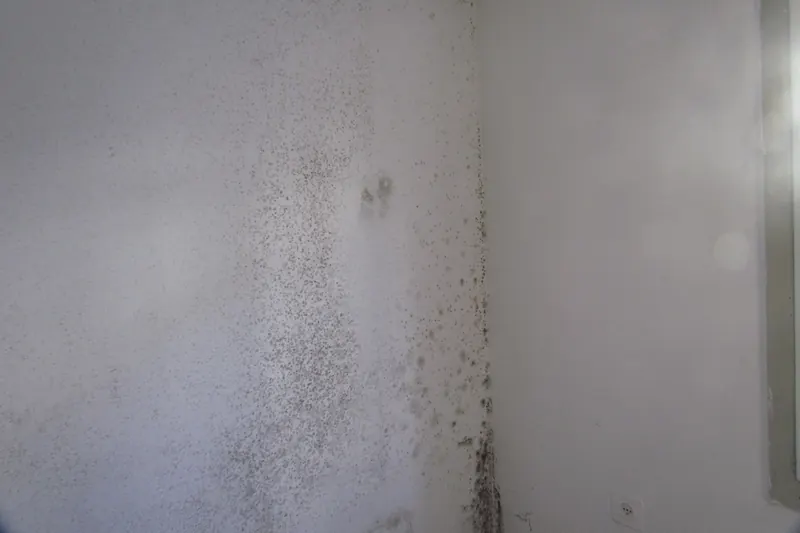
How fast does mold grow after a water leak?
EPA puts it plainly: if wet or damp materials are dried within 24 to 48 hours of a leak, in most cases mold won't grow. Treat that as a deadline, not a guarantee. A cool, humid basement with poor airflow dries slowly, so the same leak that's harmless in a sunny kitchen can turn into a moldy wall downstairs.
Visible mold often shows up later than it starts. By the time you see gray-black speckles low on the drywall or smell that musty odor, it has usually been growing for a while behind or under the surface.
What has to be thrown out?
Hard, non-porous things can usually be cleaned. Soft, absorbent things are a different story. EPA says porous materials such as ceiling tiles and carpet may have to be discarded once moldy, because mold fills their crevices and can be impossible to remove fully (EPA: Mold Cleanup in Your Home).
| Material | Usually | Why |
|---|---|---|
| Concrete floor, block walls | Keep | Clean and dry; nothing for mold to hide in |
| Metal, glass, hard plastic | Keep | Wash, sanitize and dry |
| Drywall and insulation soaked by floodwater or sewage | Toss | CDC says to remove and discard them |
| Carpet and pad | Toss if they can't dry fast | CDC lists them among things to discard if not dried quickly |
| Ceiling tiles that have gone moldy | Toss | EPA says mold can't be fully removed from them |
| Upholstered furniture, mattresses | Toss if soaked | Too slow to dry, per CDC |
Per the CDC, drywall and insulation soaked by floodwater or sewage go out with the trash, along with anything that won't come clean or dry fast (CDC). When in doubt with a cardboard box of papers, photograph it for the insurer and let it go.
How do we dry a basement fast enough?
Drying in the first 48 hours
- Stop the water first: fix the leak or have the pump or plumbing repaired.
- Remove standing water with a wet-dry vacuum or pump, once you know the power is safe.
- Pull up wet rugs and pad and carry soaked boxes outside.
- Cut away soaked drywall above the waterline so the wall cavity can dry.
- Run fans and a dehumidifier around the clock, with windows closed if the outdoor air is humid.
- Keep going until the materials feel dry to the touch, not just the surface.
Humidity is the long-term half of the job. EPA's target is indoor humidity below 60 percent, with 30 to 50 percent as the ideal. In a cool basement, check the dehumidifier: ENERGY STAR notes that below about 65°F frost can form on the coils and cut performance, so a low-temperature model may be needed (ENERGY STAR). Where the water from it goes is covered in condensate and dehumidifier drains.
Can we clean the mold ourselves?
On hard surfaces, often yes. For mold on non-porous surfaces, the CDC's mix is 1 cup of household bleach per gallon of water, followed by a rinse with clean water (CDC bleach guidance). Use regular, unscented bleach, open windows, and never use it in a closed space.
Protect yourself while you work. EPA recommends rubber gloves, long pants, sturdy shoes, and a face mask and goggles when removing mold (EPA: Flooded Homes).
What if the leak was sewage, not clean water?
Then mold is the second problem, not the first. Sewage carries bacteria and other pathogens, so the cleanup calls for boots, gloves and eye protection, a different bleach ratio for sanitizing, and a stricter rule about what to throw away. Follow the steps for cleaning up after a sewage backup.
If you're still working out where the water came from, start with what to do when water comes in during a storm or why the floor is wet when the sump pit is dry.
The bottom line
Give yourself two days, at most. Get the water out, get soft materials out of the room, and run fans and a dehumidifier until things are truly dry. Clean hard surfaces, throw out what can't be dried, and keep the basement's humidity under 60 percent from then on.
Readers also ask
Can mold grow on bare concrete?
It can grow on the dirt and dust on concrete, but the slab itself cleans up well. Scrub, rinse and dry it.
Should we paint over mold?
No. Paint over live mold just hides it. Clean and dry the surface first, and fix the moisture source.
Is a musty smell a sign of mold even if we can't see any?
Often, yes. Look behind boxes, under carpet and at the bottom of drywall, especially on outside walls.
Does homeowners insurance pay for mold cleanup?
It depends on what caused the water. Seepage is generally treated as maintenance; see what insurance covers for basement water.
When should we call a professional?
When the mold covers a large area, keeps coming back, is inside walls or ductwork, or the water was sewage.