Is a battery backup sump pump worth it?
Answered by the column’s editors · · about 5 minutes to read
A sump pump battery backup is worth it if your pit fills during storms, because storms are when the power goes out. Just know its limits: hours of continuous pumping, not days, and a battery to replace every few years.
Short answer: for most basements with a busy sump pit, yes. The main pump runs on household current, and the heavy rain that fills your pit is the same weather that knocks out power. A backup covers that gap, and it also steps in if the main pump simply quits.
What it won't do is run forever. A battery holds a fixed amount of energy, so the useful questions are how long it lasts in an outage and who will look after it.
What does a battery backup actually do?
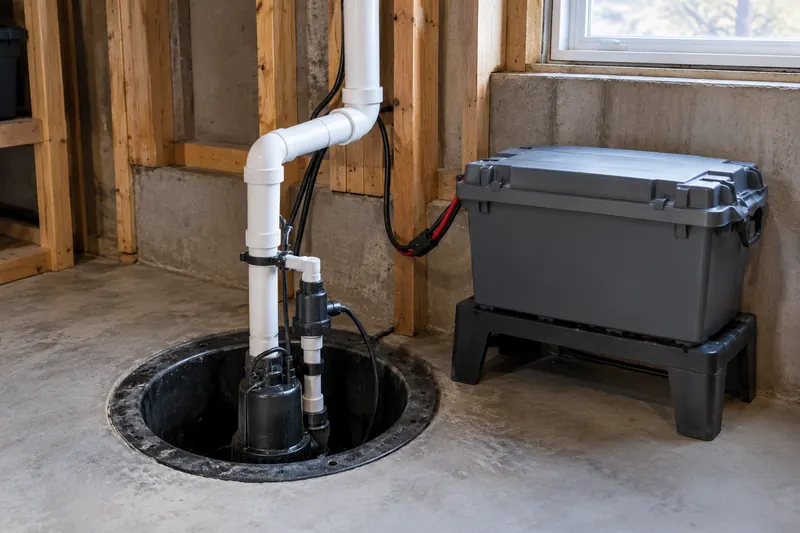
It's a second pump that sits in the same pit with its own float and its own battery. Liberty's Model 441, for example, is a 12-volt pump designed to work alongside a 120-volt primary pump, and the battery is sold separately. If the water rises past the point where the main pump should have started, the backup takes over and a charger tops the battery up once power returns.
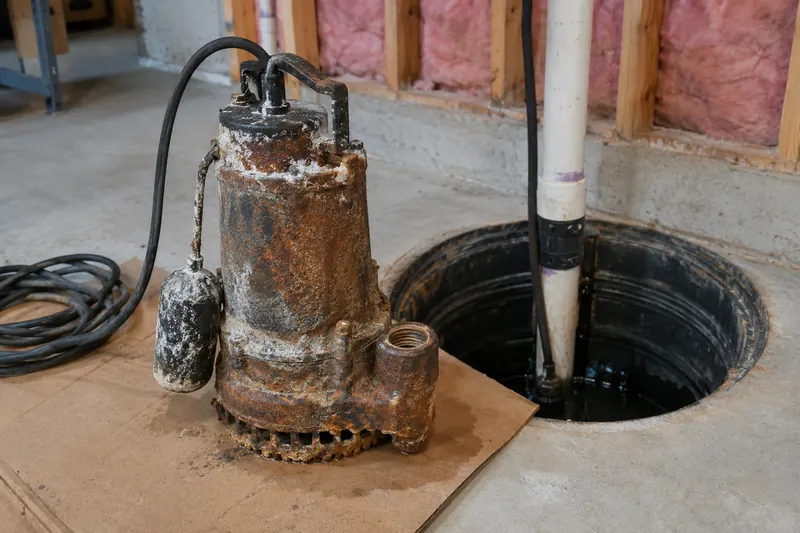
That second float matters on dry days too: the backup doesn't care why the main pump stopped. Our answer on how long sump pumps last covers the warning signs of a tired primary.
How long will a battery backup keep pumping?
Hours, not days, if it runs nonstop. Liberty's sales sheet for its StormCell 442 series lists about 5.5 hours of continuous run, roughly 8,000 gallons, at a 10-foot lift on one Group 31 battery, and about 11 hours, roughly 16,000 gallons, on the dual-battery models. Zoeller gives a similar figure: its AquaNot Spin 508 runs about 5.5 hours continuously on a fully charged 175-minute battery.
Most backup pumping is on and off, not flat out, as Zoeller's technical data notes, so a charge stretches further. Recharging is slow, though. Liberty puts its 442 charger's recharge from flat at no less than 12 hours, which matters when storms arrive back to back.
How long do backup batteries last?
Backup batteries typically give 3 to 5 years, Liberty says, depending on use, upkeep and conditions. Zoeller is blunter: its AquaNot Spin manual says to replace your battery every 3 years, and to use a deep-cycle battery of the size and capacity it names or larger. Zoeller's own battery sheet rates its flooded maintenance-free batteries at 3 to 4 years and its AGM batteries at 4 to 5.
Write the install date on the battery. A worn-out one looks fine until the night you need it.
| Setup | Works in a power outage? | Main limits |
|---|---|---|
| Main pump only | No | Nothing pumps if power or the pump fails |
| Battery backup | Yes, until the battery runs down | Hours of continuous run; battery replacement every few years |
| Water-powered backup | Yes, on public water with enough pressure | Uses city water; needs backflow protection; won't run on a well during an outage |
| Battery backup plus generator | Yes, for as long as fuel lasts | CDC: never run a generator inside the home or basement |
Is a battery backup worth it for your basement?
It's worth the most if your pump runs often in storms, the basement is finished, or nobody is home to notice a failure. It matters less if the pit stays nearly dry in heavy rain. If you're on public water, a water-powered backup is the other route, with no battery to replace but a water bill and backflow rules to handle.
Two money notes. The Maryland Insurance Administration says damage from an overflowing sump is generally paid only if you added water and sewer back-up coverage as an endorsement (archived copy), so read whether insurance covers a failed sump pump. And inside Rockville city limits, the city's flood program lists sump pump backup systems among eligible upgrades; see help paying for flood fixes.
Who should install a battery backup?
The plumbing side is simple: the backup tees into the discharge line and needs room in the pit. The electrical side is where people get into trouble. Liberty's 442 manual calls for a separate, properly fused and grounded branch circuit and strongly recommends GFCI protection even where code doesn't require it. Zoeller says installation and servicing of electrical circuits should be done by a qualified, licensed electrician.
Keeping a backup ready
- Pour water into the pit until the main pump starts, and confirm water leaves the outside end of the line.
- With the main pump unplugged, fill the pit again to check that the backup float starts the backup.
- Plug the main pump back in right away.
- Check the charger's status lights and any alarm each time you test.
- Replace the battery on the maker's schedule, or sooner if run time drops.
The bottom line
If your sump pit fills in storms, a battery backup is sensible insurance against the most likely failure, a power outage. Expect hours of continuous pumping per charge, plan on a new battery every 3 to 5 years, and have an electrician handle any new wiring.
Readers also ask
Can a battery backup run a regular sump pump?
Not in the usual setup. A typical backup is its own 12-volt pump and float, next to the 120-volt main pump.
Does the backup need its own discharge pipe?
Many share the main pump's line; follow the maker's instructions for check valves. Liberty's water-powered SumpJet is the exception, since its discharge must not connect to the main pump's.
Does a backup need a special battery?
Use the type the pump maker names. Zoeller's AquaNot Spin manual calls for a BCI group 27 deep-cycle battery with a 175-minute reserve capacity, or larger, not a car starting battery.
How often should a backup sump pump be tested?
Test it whenever you test the main pump. A test only counts if water actually leaves the house.
Is a high-water alarm worth adding?
Yes, if the setup lacks one. An alarm tells you the water rose past normal, whatever the cause.
Where this answer comes from
- Liberty Pumps: Model 441 battery backup
- Liberty Pumps: StormCell 442-Series sales literature
- Liberty Pumps: 442-Series installation manual
- Liberty Pumps: FAQs, page 1 (backup batteries)
- Zoeller: AquaNot Spin installation instructions FM3166
- Zoeller: AquaNot Spin 508 technical data FM3165
- Zoeller: AquaNot maintenance-free batteries FM3303
- MIA: flood vs. water damage and back-up endorsements (archived copy)
- CDC: Guidelines for Cleaning Safely After a Disaster (generators)
- Chesapeake Bay Trust: City of Rockville flood mitigation application instructions