Could a water-powered backup sump pump work on our public water?
Answered by the column’s editors · · about 5 minutes to read
A water-powered sump pump backup can work well on public water if the pressure is there, about 30 psi or better, but it burns city water, needs approved backflow protection, and only ever backs up an electric pump.
Short answer: usually yes, if your house is on WSSC Water or another public system and the pressure is decent. These backups need no battery and no outlet, so they keep going through a long power outage as long as the city's water keeps flowing.
The trade-offs are real, though. Every gallon removed costs you city water, and the plumbing has to protect your drinking water from the sump with a backflow device your jurisdiction approves.
How does a water-powered backup pump work?
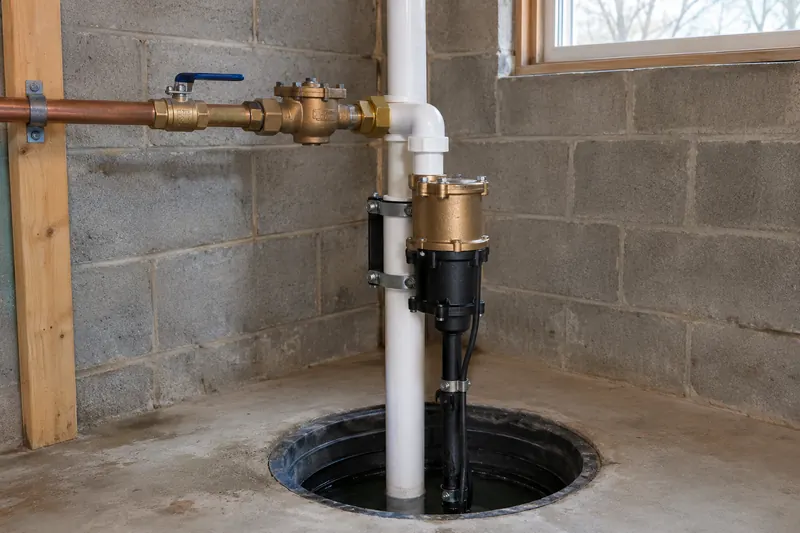
City water is forced through a narrow nozzle, and the drop in pressure creates suction. Zoeller describes it as a specialized nozzle that creates suction to draw water out of the sump pit. A float opens the valve when the water rises and closes it when the level drops.
It's strictly a backup. Liberty says its SumpJet should be installed alongside a primary electric sump pump, never in place of one. And it depends on water pressure that doesn't need your electricity, which is why it's a public-water device: Liberty's product page warns that on a home with a well pump, the unit will not operate during power outages.
How much city water does a water-powered sump pump backup use?
More than you might expect. Liberty's SJ10 manual says the SumpJet uses roughly 1 gallon of water to remove 2 gallons of sump water, depending on how high it has to lift it. Zoeller's older Home Guard Max was rated at up to 2 gallons removed per gallon used.
Lift matters as much as pressure, as the manual's performance table shows.
| Lift | 30 psi | 40 psi | 60 psi |
|---|---|---|---|
| 4 ft | 12.8 | 15.4 | 19.8 |
| 8 ft | 9 | 12.5 | 17 |
| 12 ft | 5.5 | 9.3 | 15.2 |
| 15 ft | not listed | 7.2 | 13.5 |
Compare those numbers with your pit's storm inflow; what size sump pump a basement needs explains the ruler test. If inflow outruns the backup at your lift, it slows the flooding without stopping it.
Is your water pressure high enough?
Liberty's manual recommends at least 30 psi, measured ahead of the backflow device with the valve open, and allows up to 100 psi with the valve closed. Below that, it warns, the unit may not empty a basement pit adequately.
The catch: the manual notes that a reduced pressure zone (RPZ) backflow assembly can lower operating pressure. Have your plumber check pressure where the backup will connect.
What backflow protection will WSSC or the county require?
This part decides how simple the project is. Sump water isn't drinkable, and this pump connects your drinking water line to the pit. Liberty's manual says that under the Uniform Plumbing Code and some state codes, Michigan's for one, the SumpJet needs an RP or RPZ backflow device, and it tells owners to ask their local plumbing or water authority. Zoeller's sheet says some districts require a reduced pressure principle preventer to ASSE 1013.
We searched WSSC's 2024 code and didn't find a rule written specifically for water-powered sump pumps, so treat the device choice as WSSC's call in Montgomery and Prince George's, and your county's elsewhere. If an RPZ or other testable assembly is required in WSSC territory, its code says installing one takes a long-form permit, and testing or replacing it may only be done by a WSSC-licensed cross-connection technician. WSSC also says all testable backflow preventers must be tested annually (archived copy). Not sure who rules where you live? Start with who issues plumbing permits.
Where does the backup's water go?
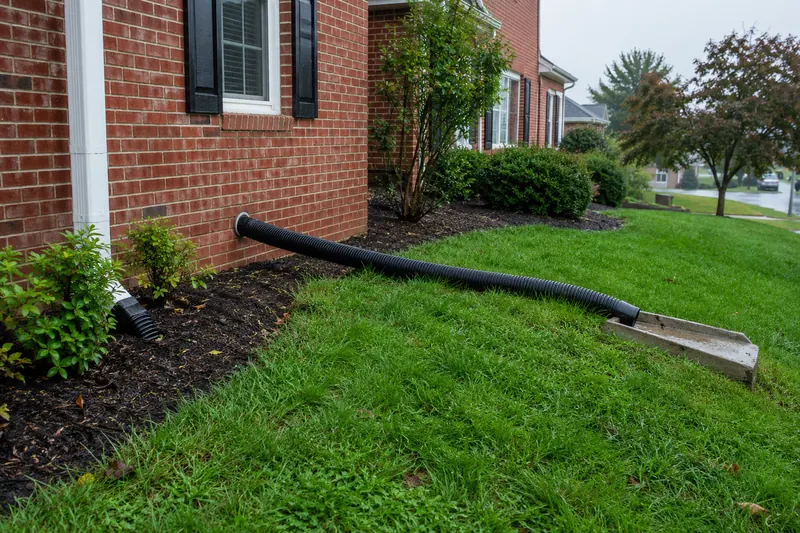
Not into the main pump's pipe, and not into a sewer. Liberty's manual says the SumpJet discharge must not connect to the primary pump's line or directly to the municipal drain. It calls for at least a 1-inch air gap, or a line run outside with its end 6 to 24 inches above the ground. For where it may land, see the rules on sump discharge.
The supply side needs permanent piping such as copper, PEX or CPVC; the manual rules out a garden hose.
Before you buy one
- Confirm the house is on public water, not a private well.
- Have a plumber measure pressure where the backup would connect.
- Ask WSSC or your county which backflow device it requires and whether it must be tested every year.
- Compare the maker's removal chart at your lift with your pit's storm inflow.
- Hire a licensed plumber to pull the permit and install it with permanent piping.
- Test it by filling the pit with water, and run it monthly if it sits idle, as Liberty advises.
Water-powered or battery: which suits your house?
A water-powered unit never needs a new battery and doesn't run down in a long outage, but it uses city water, needs backflow paperwork, and loses capacity at high lifts. A battery backup works on any house, including well homes, but pumps for hours rather than indefinitely.
The bottom line
On public water with about 30 psi or more, a water-powered backup can keep a pit under control through a long outage. Expect to use about a gallon of city water for every two removed, ask WSSC or your county which backflow device it wants, and have a licensed plumber install it under permit.
Readers also ask
Does a water-powered sump pump use water when it isn't running?
No. Its float valve stays shut until the pit fills, so it only draws city water while pumping.
Can a water-powered backup replace the main sump pump?
No. Liberty says its unit is an emergency backup that goes alongside an electric primary pump.
Will a water-powered backup work if the water main breaks?
Not if pressure drops. Anything that cuts or weakens your supply also weakens the backup.
Does an RPZ cost money every year?
Where one is required, WSSC says testable backflow preventers must be tested yearly by a licensed tester, so plan for that visit.
Where this answer comes from
- Zoeller Pump Co.: Anatomy of Backup Sump Pump Systems
- Liberty Pumps: SJ10 SumpJet installation manual
- Liberty Pumps: SJ10 SumpJet product page
- Liberty Pumps: FAQs, page 28 (SumpJet as a backup)
- Zoeller: Home Guard Max technical data FM2805
- ICC: code change proposal GEW161-14
- WSSC Water: code effective December 2025, cross-connection rules (archived copy)
- WSSC Water: Information for Homeowners (archived copy)