What's the difference between an ejector pump and a sump pump?
Answered by the column’s editors · · about 5 minutes to read
Ejector pump vs sump pump comes down to what's in the pit. An ejector lifts toilet and drain waste up into the sewer; a sump pump sends clean groundwater outside.
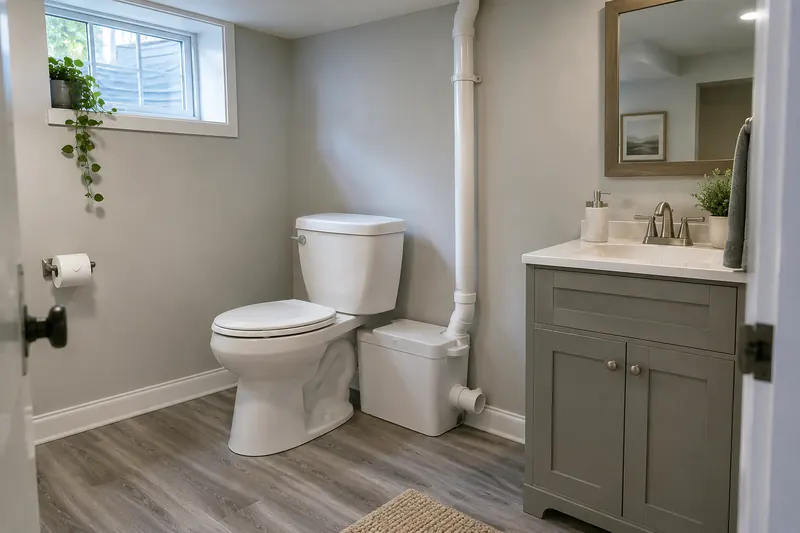
From across the room they look like twins: a basin in the floor, a pipe climbing toward the joists. The resemblance stops there. One handles whatever the basement toilet, shower and sink send down. The other handles water that seeps up from the soil around the foundation.
Mixing them up causes real trouble. A sump pump fed sewage will clog and quit, and a sump piped into the sewer breaks the rules in Montgomery and Prince George's. Know which one you own.
What does a sump pump actually do?
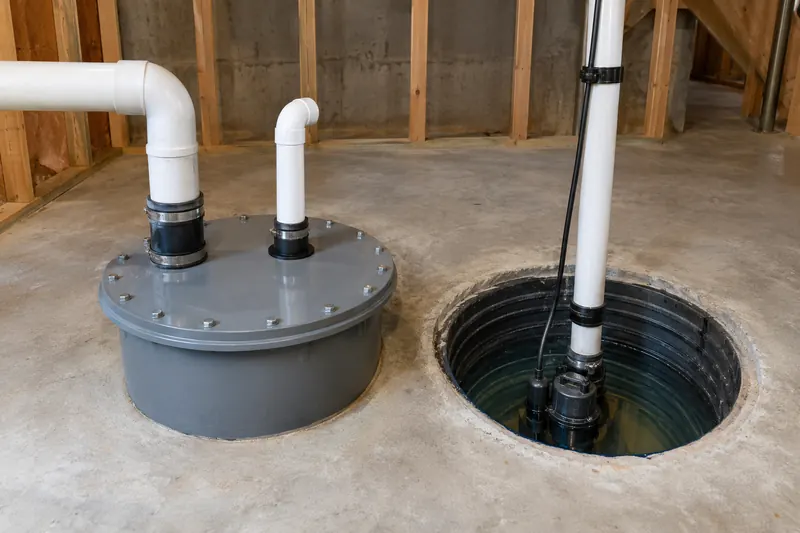
A sump pump sits in a pit that collects groundwater from drain tile or seepage under the slab. As the water rises, a float lifts and switches the pump on; Liberty Pumps describes the float as riding up and down with the level in the basin. The pump then pushes that water out through a discharge pipe toward the yard.
That's clear water, in plumbing terms, and it has to stay out of the sanitary sewer. The 2024 WSSC Plumbing and Fuel Gas Code names a foundation sump pump tied to the sewer as a prohibited connection (§116.4). Its legal destinations are a separate question: see where a sump line may discharge.
What does an ejector pump do?
An ejector, also called a sewage pump, serves fixtures that sit lower than the sewer pipe leaving the house. Under the model plumbing code, waste that can't fall to the sewer on its own collects in a sealed, vented basin, and a pump that runs on its own lifts it into the gravity drain (ICC, 2012 IPC).
A pump taking toilet waste must pass round solids up to 2 inches across, and Liberty treats 2-inch solids as the bar for calling something a sewage pump at all. Sump pumps aren't built for it: Liberty says plainly they are not designed for human waste or solids.
Ejector pump vs sump pump: how can you tell which is which?
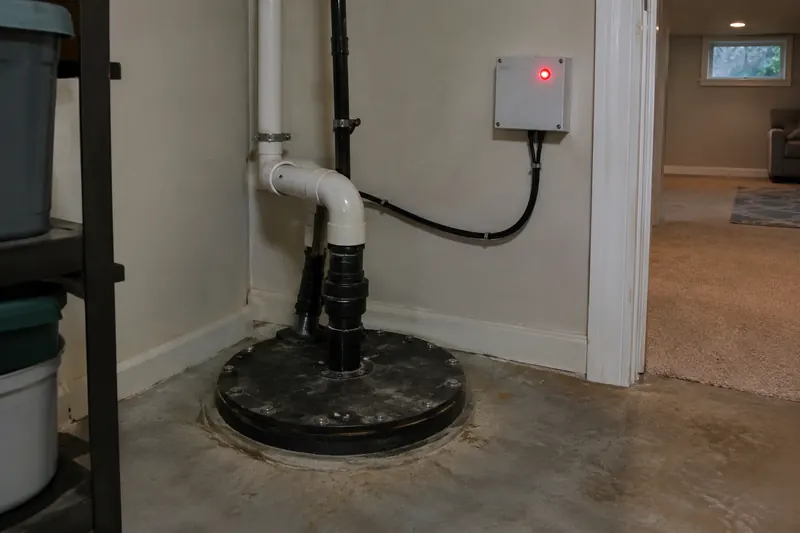
Start with the lid. A sewage basin has a bolted, sealed cover with a vent pipe rising from it, because sealed covers are required to hold in sewer gas. A sump pit usually has a loose lift-off lid, or none at all.
Then follow the pipes. An ejector's discharge turns back into the house drain, entering the top of the pipe through a wye fitting under the model code. A sump discharge heads out through the wall toward the yard.
| Feature | Sewage ejector | Sump pump |
|---|---|---|
| What it moves | Toilet, sink, shower and laundry waste | Groundwater from drain tile and seepage |
| Basin cover | Sealed, gas-tight and vented | Lift-off cover, no vent pipe |
| Where it sends water | Up into the house drain and on to the sewer | Outdoors, never into the sanitary sewer |
| Solids | Must pass 2-in. spheres when it serves a toilet | Not built for solids or human waste |
| Valves on the discharge | Check valve plus a full-open valve | Check valve |
What does the code expect from an ejector system?
Beyond the sealed, vented basin, the model code calls for a check valve on the discharge with a full-open valve after it, both reachable for service. Minimum pump capacity rises with pipe size.
Zoeller's sizing guidance aims for a pump cycle of at least 30 seconds and no more than 6 starts an hour, which is why sewage basins tend to be roomy. Liberty's Pro380 package, as one example, holds 41 gallons.
Venting gets extra attention in WSSC territory, where the 2024 code keeps air admittance valves off sumps and tanks except on an engineer-designed vent system. Installing an ejector is permitted work for a licensed plumber, and any new circuit belongs to a licensed electrician. Planning one? Start with whether a bathroom can go below the sewer line and the permit question.
Does an ejector pump need an alarm the way a sump pump might?
Not every code says so, but it's smart for both. Liberty says a high-water alarm isn't always required and still recommends one, since it warns you when the level rises because the pump stopped or can't keep up. If one is sounding right now, read what to do when the ejector alarm goes off.
Work out which pump you have
- Find each basin in the basement floor and note whether its lid is bolted down.
- Look for a vent pipe rising from the lid; that marks a sewage basin.
- Trace the discharge pipe to see whether it joins the house drain or leaves through an outside wall.
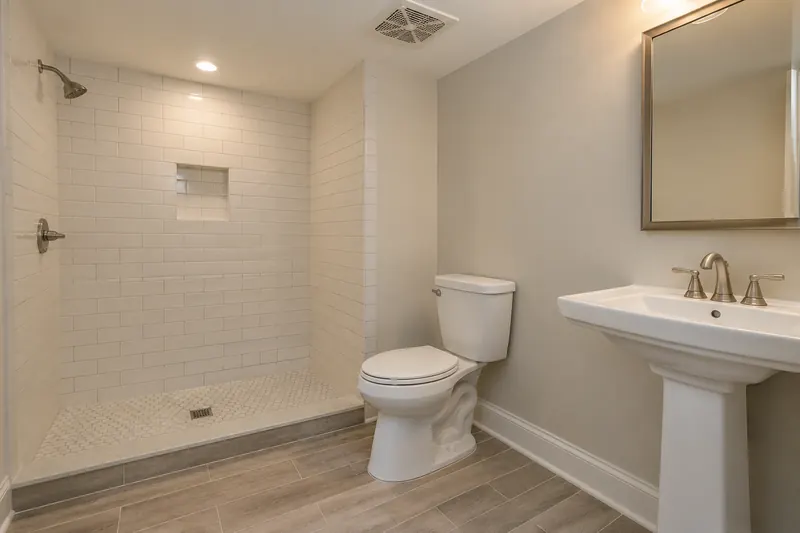
- Note which fixtures sit nearby: a basement toilet or shower points to an ejector.
The bottom line
A sump pump moves clean groundwater outdoors; an ejector lifts sewage up to the sewer from a sealed, vented basin. They aren't interchangeable, and neither should do the other's job. If you're adding a basement bathroom, the ejector side is a licensed plumber's work under a permit.
Readers also ask
Can a sump pump be used as a sewage ejector?
No. Liberty says sump pumps aren't designed for water carrying human waste or solids, and the code expects toilet-serving pumps to pass 2-inch solids. Swapping one in invites clogs and backups.
Can the sump pump drain into the ejector basin?
No. That sends groundwater into the sanitary sewer, which WSSC's code lists as an illegal discharge. Sump water belongs outdoors.
Why does the ejector basin have a vent pipe?
The basin holds sewage and gives off sewer gas, so the code wants it tightly covered and vented. In WSSC counties, an air admittance valve on the basin is off limits without an engineered vent design.
Is a grinder pump the same thing as an ejector?
Close, but not the same. The code lets grinder pumps that serve toilets use discharge openings as small as 1-1/4 inches, while a standard ejector serving a toilet has to pass 2-inch solids whole.
Where this answer comes from
- Liberty Pumps: FAQs, float switches and high-water alarms
- Liberty Pumps: FAQs, sump and sewage basins
- Liberty Pumps: FAQs, sump pumps and wastewater
- Liberty Pumps: FAQs, what makes a sewage pump
- Liberty Pumps: Pro380 sewage basin package
- International Code Council: IPC 2012, sewage sumps, ejectors and their valves (archive.org)
- WSSC Water: code sections 116.4 and 918.8 on sump discharges and sump vents (archived copy)
- Zoeller Pump Co.: sewage pump cycles and starts per hour