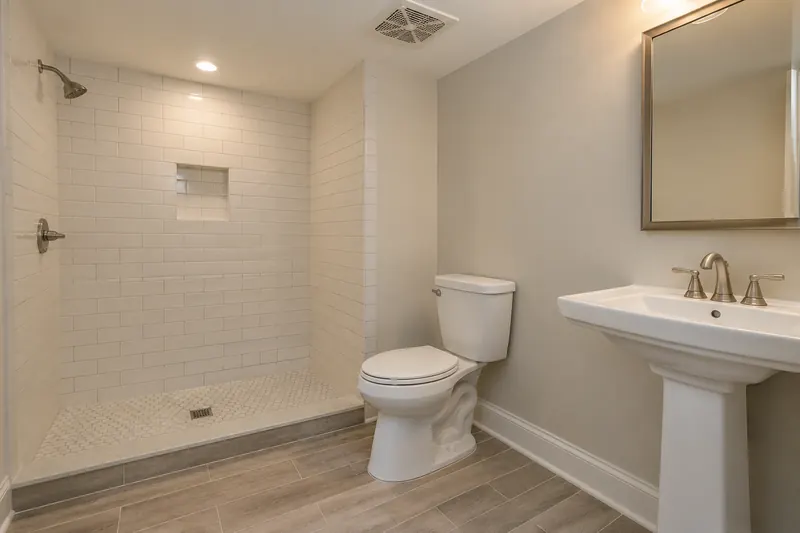
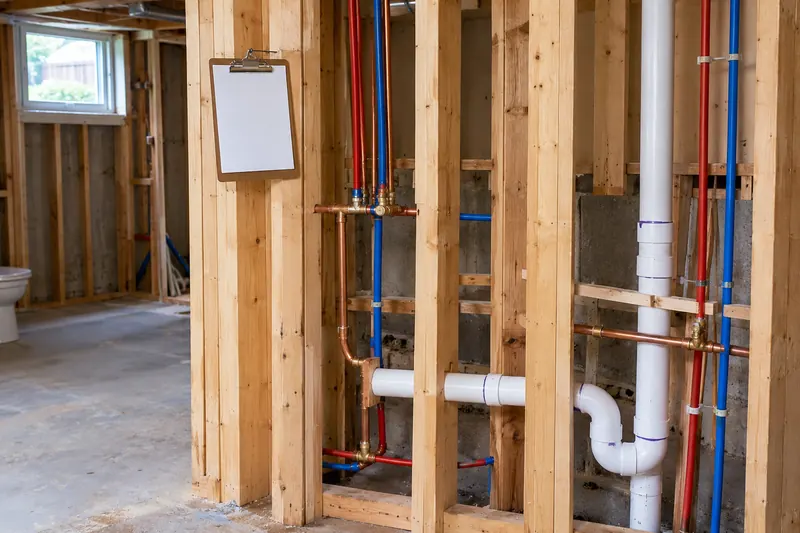
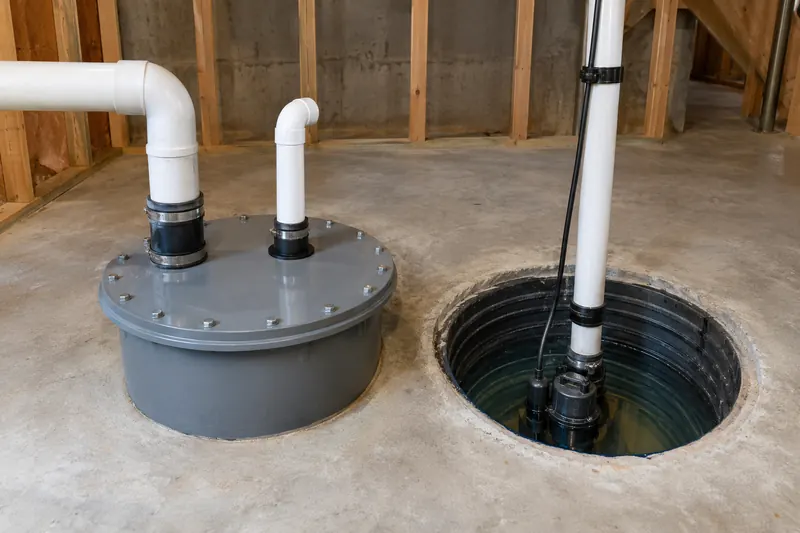
Is an upflush toilet a good idea for our basement?
Answered by the column’s editors · · about 5 minutes to read
An upflush toilet is a good idea when you want one toilet, maybe a sink, below the sewer line without breaking up the slab. For a full bath or laundry, an ejector basin is built for heavier duty.
An upflush, or macerating, toilet sits right on the finished floor. Beside or behind the bowl is a box holding a grinder and a small pump that turn waste into slurry and push it up a narrow pipe to the house drain. Nothing gets buried in concrete.
That's the appeal. The trade-offs: every flush depends on a motor, the unit takes only what its maker allows, and it still needs a true vent, a protected outlet and a permit.
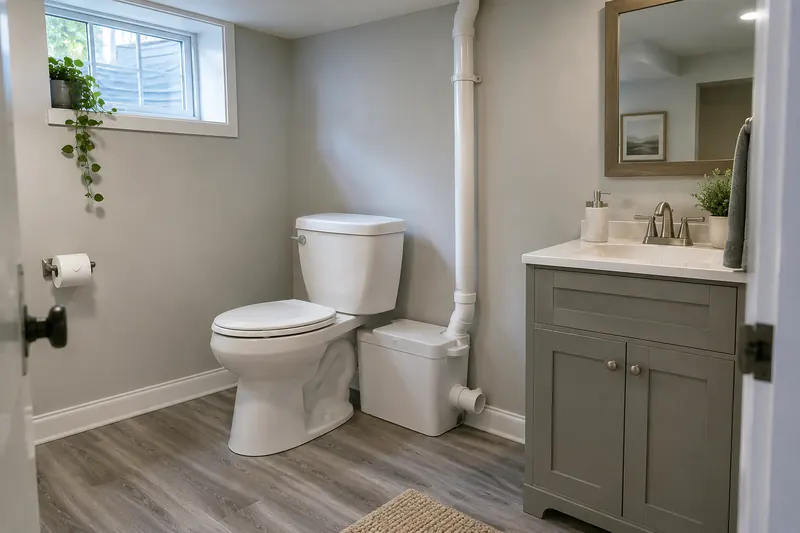
How does an upflush toilet work?
Flush, and the waste drops into a sealed tank next to the bowl. A switch starts the macerator, which grinds the solids, and the pump moves the slurry out through small-bore pipe. The model plumbing code makes room for this design: a macerating unit serving one toilet may have a discharge opening as small as 3/4 inch, and these systems must meet CSA B45.9 or ASME A112.3.4 and go in per the maker's instructions (ICC, 2012 IPC).
For real figures, take Liberty's Ascent II as one maker example. Liberty rates it to lift waste 25 feet up and 150 feet across through 1-inch pipe (Liberty Pumps). Its sales literature adds a 36-foot shut-off head, certification to both standards above, and a WaterSense-listed toilet using 1.28 gallons per flush.
In the video below, a macerator maker walks through the grinding and pumping and calls its unit easy to install. Mechanically, it is simpler than trenching a slab. In Maryland it's still permitted plumbing work for a licensed plumber, and a new outlet or circuit is a licensed electrician's job.
Is an upflush toilet a good idea for your basement in particular?
It fits well when you want a half bath, the main drain leaves the basement above the floor, and cutting into a finished slab would be costly or disruptive.
It's a weaker fit when you want a full bathroom with a shower, a laundry hookup and a bar sink all draining to one place. Liberty's installation manual says the Ascent II isn't rated for fluid hotter than 104°F, so check the maker's fixture list before plumbing anything that drains hot water into a macerator. For a bigger bathroom, a sealed ejector basin is the usual route; our page on bathrooms below the sewer line lays out both.
| Question | Upflush macerating unit | Sewage ejector basin |
|---|---|---|
| Where it sits | On the floor beside or behind the toilet | In a pit cut into the slab |
| Discharge pipe | As small as 3/4 in. for one toilet under the code; 1 in. on the Ascent II | Larger pipe sized to the pump |
| Solids | Ground to slurry before pumping | Pump passes 2-in. solids when it serves a toilet |
| Venting | True vent; the Ascent II bars air admittance valves | Sealed, vented basin; WSSC bars these valves on sumps without an engineered design |
| Power | Plugs into a fused, GFCI-protected outlet | Pump circuit set up per maker and code |
What does an upflush toilet need to be installed properly?
Venting first. The Ascent II manual forbids air admittance valves and spring-loaded vent devices since air has to move both ways through the vent, and Liberty's literature shows a 1-1/2-inch vent connection. In the two WSSC counties, the 2024 WSSC code adds its own limit: no air admittance valve on a sump or tank without a vent system an engineer designed.
Then power. The manual says the pump must plug into a properly fused outlet with ground-fault (GFCI) protection, with wiring done by qualified people. If there's no such outlet near the toilet, adding one is work for a licensed electrician.
Then paperwork. WSSC Water says most plumbing projects in its two counties need a WSSC-licensed plumber, and other counties run their own permit offices. Our basement bathroom permit page covers who issues what.
What are the downsides of an upflush toilet?
It runs on electricity, so during an outage it can't flush away waste. You'll hear the motor after each use. And it only handles what the maker lists, so keep the manual near the unit and follow it.
A sealed tank should keep odors in. If the room starts to smell, the vent or a seal is the usual suspect, and our page on why a clean basement bathroom smells walks through the checks.
Before you buy an upflush toilet
- Measure how high and how far the discharge pipe must travel to reach the main drain.
- Compare that route with the maker's lift and distance ratings.
- Plan a true vent pipe; don't count on an air admittance valve.
- Check for a fused, GFCI-protected outlet nearby, and book a licensed electrician if there isn't one.
- Hire a licensed plumber who pulls the permit, and keep the manual with the unit.
The bottom line
For a single toilet below the sewer line, an upflush unit can be the sensible choice: no slab cutting, small pipes, a modest footprint. It needs a real vent, a protected outlet and a permit like any other plumbing. Want a full bath or laundry down there? Look at an ejector basin instead.
Readers also ask
Can an upflush toilet handle a shower or sink too?
Some macerating systems accept extra fixtures. Check the maker's list, and mind temperature limits like the Ascent II's 104°F. Several fixtures draining to one spot often points to an ejector basin.
Do upflush toilets smell?
They shouldn't. The tank is sealed and vented, so a sewer odor usually means a vent problem or a seal that has let go.
Can we vent an upflush toilet with an air admittance valve?
Not the Ascent II: its manual rules out air admittance valves and spring-loaded vent devices. Check your own unit's manual and your local code.
What happens to an upflush toilet in a power outage?
It can't pump, so stop using it until the power returns.
Does an upflush toilet need a permit in Maryland?
Yes. Treat it as permitted work for a licensed plumber, with a licensed electrician for any new outlet or circuit.
Where this answer comes from
- International Code Council: IPC 2012 rules for macerating toilet systems (archive.org)
- Liberty Pumps: Ascent II product page
- Liberty Pumps: Ascent II sales literature (PDF)
- Liberty Pumps: Ascent II installation manual (PDF)
- WSSC Water: 2024 code, air admittance valves on sumps (archived copy)
- WSSC Water: who may do plumbing work (archived copy)