Can we put a bathroom in a basement that sits below the sewer line?
Answered by the column’s editors · · about 5 minutes to read
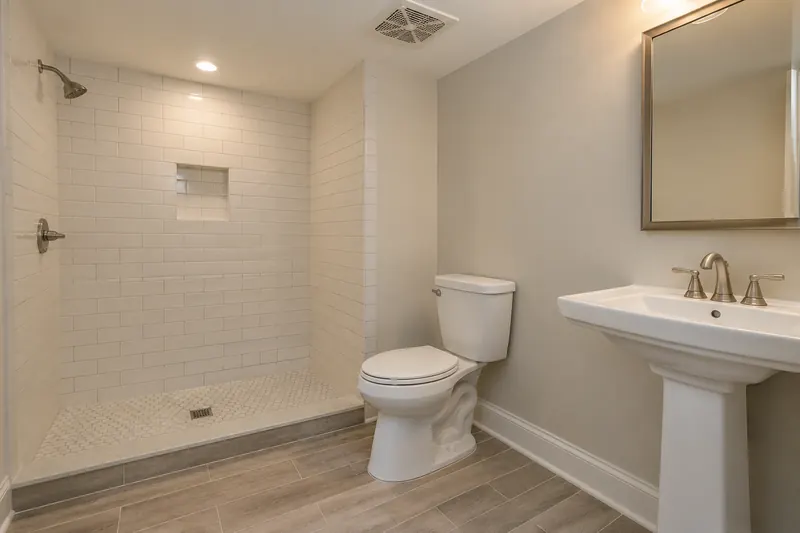
Yes, a basement bathroom below the sewer line is doable. The waste just has to be pumped up, from a sealed ejector basin in the slab or an upflush macerating unit, installed by a licensed plumber with a permit.
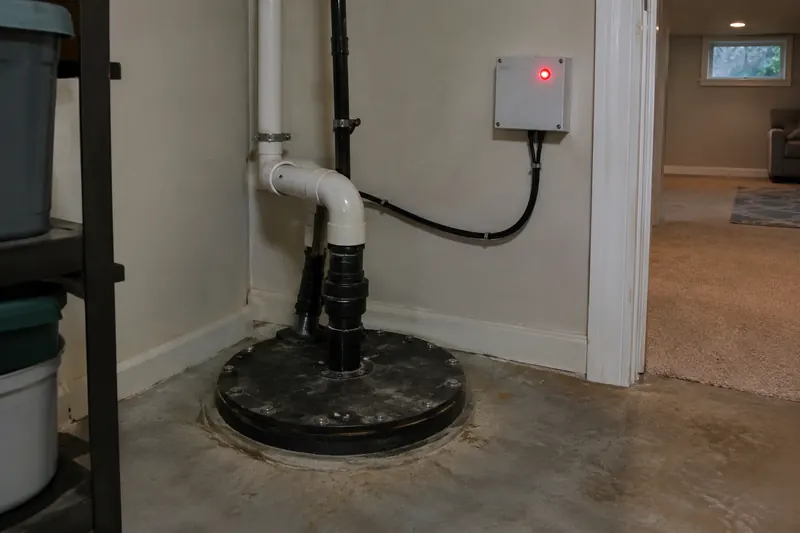
Gravity normally carries waste from a toilet out to the street. When the toilet sits lower than the pipe leaving the house, gravity works against you, and something has to lift the waste. The model plumbing code spells out how: drains that can't reach the sewer by gravity empty into a tightly covered, vented sump, and automatic pumping equipment raises the contents into the gravity drain (ICC, 2012 IPC).
So the real questions are how deep your sewer pipe runs, which lifting method suits the room, and who does the work. For any pumped system in Maryland, that last one has a firm answer: a licensed plumber, under a permit.
How do you know the bathroom is below the sewer line?
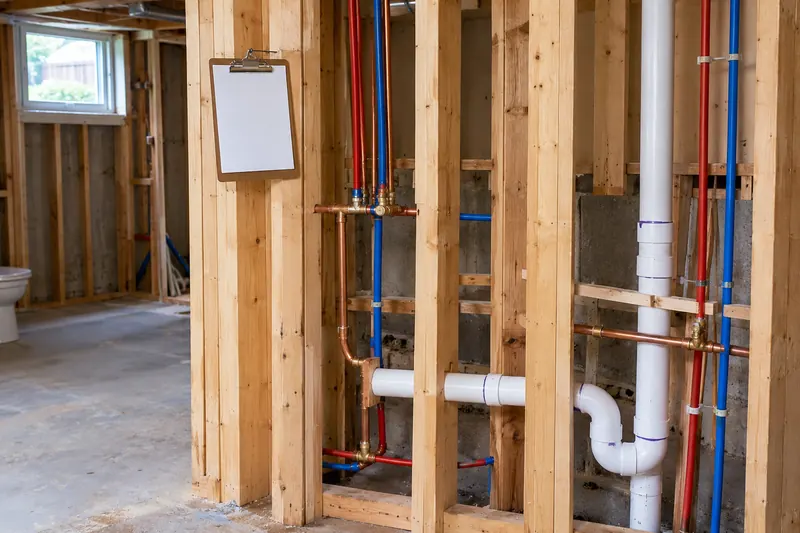
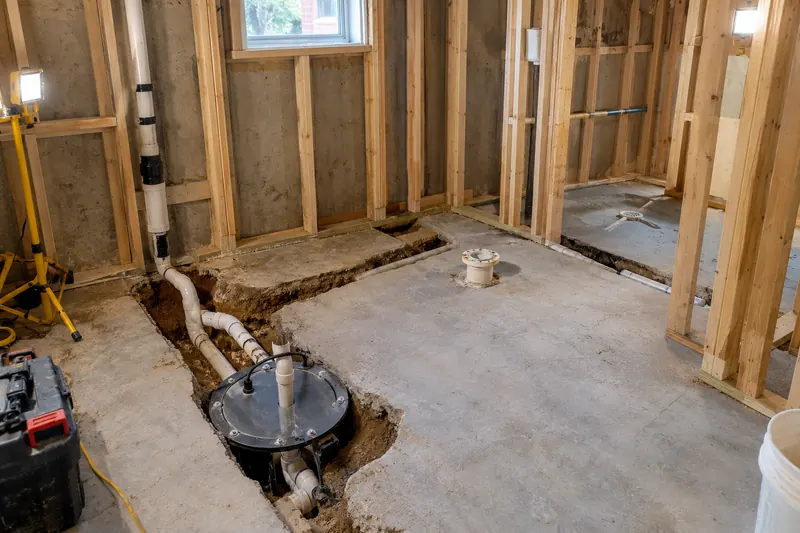
Find where the main drain leaves the basement. If it exits through the foundation wall above the slab, anything set on the floor sits below it. If the main runs under the slab, a licensed plumber can measure whether there's enough depth and slope to tie new drains in by gravity.
A second height matters too: the next manhole upstream on the street sewer. The 2024 WSSC code requires a backwater valve for fixtures on a floor below that manhole cover's rim, even when they drain by gravity. More on that in whether you need a backwater valve.
What are the options for a basement bathroom below the sewer line?
| Option | How it works | Fits best when |
|---|---|---|
| Gravity drain | New drains slope under the slab to a main that runs deep enough | The main leaves below the floor with depth to spare |
| Sewage ejector basin | Fixtures drain to a sealed, vented basin set in the slab; a pump lifts waste to the house drain | A full bath, laundry or several fixtures sit below the sewer |
| Upflush macerating unit | A box beside the toilet grinds waste and pumps it through small pipe | One toilet, perhaps a sink, and cutting the slab is impractical |
An ejector basin means breaking concrete to set the basin and trench drains to it. In return it serves a whole bathroom. Liberty's Pro370 package, as one example, pairs a 21-by-30-inch basin with pumps that pass 2-inch solids. Whatever the brand, the discharge needs a check valve and a full-open valve, and the lid must be sealed; Liberty Pumps notes sealed covers are required on sewage basins to contain sewer gas. Our side-by-side of ejector pumps and sump pumps explains why the two aren't interchangeable.
An upflush system sits on the finished floor. Liberty's Ascent II, as one maker example, is rated to push waste up to 25 feet vertically and 150 feet horizontally through 1-inch pipe (Liberty Pumps). We weigh its trade-offs in whether an upflush toilet is a good idea.
Does a pumped bathroom still need a vent?
Yes. Pumping doesn't excuse venting. The model code treats piping below sewer level like any gravity drain when it comes to vents. In Montgomery and Prince George's, the WSSC code also rules out air admittance valves on the basin absent an engineer's vent design, so plan for a true vent pipe from the start.
Who can do the work, and is a permit needed?
In Montgomery and Prince George's, WSSC Water says the bulk of plumbing jobs need a plumber it has licensed. In Baltimore County, the permit application has to come from a plumber holding a county license, and no plumbing work is exempt. Anne Arundel requires one for adding or relocating fixtures and piping.
Wherever you live, an ejector or macerating system is licensed-plumber work with a permit, and a licensed electrician handles the pump circuit. The county-by-county details are in the basement bathroom permit question.
Before anyone frames the walls
- Locate where the main drain leaves the house and have a licensed plumber measure its depth.
- Decide between gravity, an ejector basin or an upflush unit based on how many fixtures you want.
- Plan a true vent route; in WSSC homes, don't count on an air admittance valve for the basin.
- Ask whether the new fixtures sit below the next upstream manhole and need a backwater valve.
- Have the plumber pull the permit, and line up a licensed electrician for the pump circuit.
What can go wrong once it's built?
Pumps wear out and the power goes off. When either happens, nothing below the sewer line gets pumped away, and the basin can back up into the shower or toilet. Liberty recommends a high-water alarm even where it isn't required, because it warns before the overflow. If yours sounds, see our steps for a sounding ejector alarm.
It's also worth a call to your insurer. The Maryland Insurance Administration says damage from sewage pushing up through drains may be covered only when the policy carries a backup endorsement, so ask for it by name.
The bottom line
A bathroom below the sewer line is ordinary plumbing: the waste goes to a sealed, vented basin or a macerating unit and gets pumped up. Pick the method by how many fixtures you want, plan a real vent, and have a licensed plumber pull the permit before the walls go up.
Readers also ask
Does a gravity-drained basement bathroom need a backwater valve?
In WSSC territory, yes if the fixtures sit below the rim of the next upstream manhole cover. WSSC's code also wants the valve's access cover labeled so nobody tiles or carpets over it.
Can we use an air admittance valve instead of a vent pipe?
Not on the basin in Montgomery or Prince George's, short of an engineer's vent design. Liberty's Ascent II manual also rules out air admittance valves, since the unit needs a true two-way vent.
What happens to the bathroom during a power outage?
The pump stops, so the basin fills with nowhere to send it. Hold off on flushing, showering or running laundry that feeds the basin until power returns.
Do we have to cut the slab?
For an ejector basin or new gravity drains, yes. An upflush unit sits on the floor, a big part of its appeal for a half bath.
Where this answer comes from
- International Code Council: IPC 2012 on building drains below sewer level (archive.org)
- WSSC Water: 2024 code amendments on backwater valves and sump vents (archived copy)
- WSSC Water: homeowner permit information (archived copy)
- Liberty Pumps: sealed sewage basin covers
- Liberty Pumps: Pro370 simplex sewage system
- Liberty Pumps: Ascent II macerating toilet system
- Baltimore County: plumbing permit applications (archived copy)
- Anne Arundel County: when a plumbing permit is required
- Maryland Insurance Administration: back-up endorsements for drains and sumps (archived copy)