Something's backing up or smells
Why does the floor drain overflow when the washing machine drains?
Answered by the column’s editors · · about 5 minutes to read
When the washing machine drain backs up into the floor drain, the shared line downstream is usually partly clogged, so the washer's surge escapes from the lowest opening in the house.
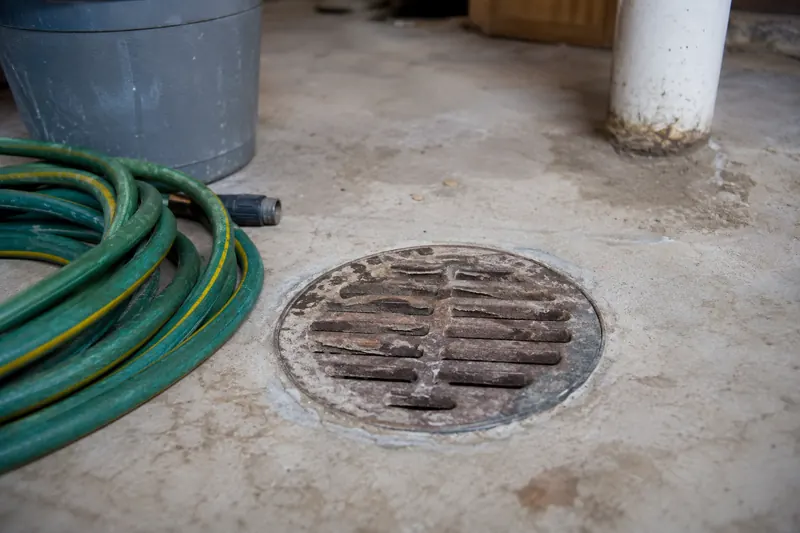
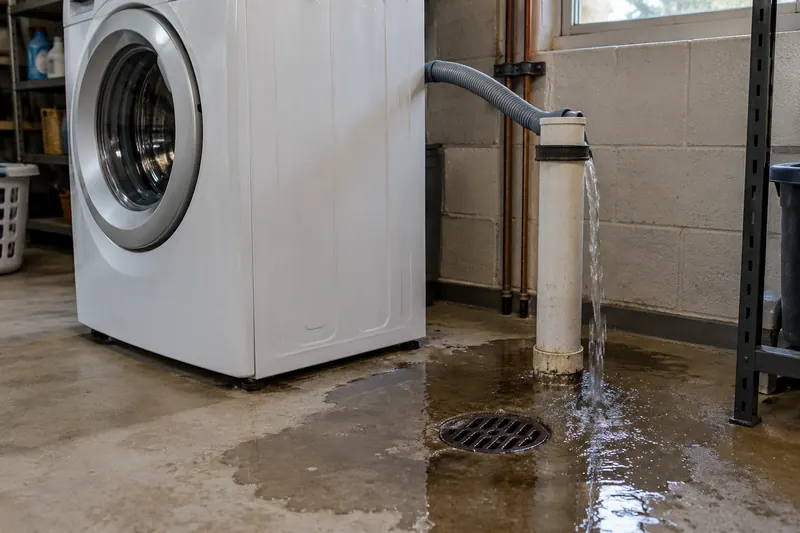
The floor drain and the washer usually empty into the same pipe on the way out. When that pipe narrows somewhere past the point where they meet, water from the washer can't leave as fast as it arrives, so it looks for the lowest exit. In a basement, that's almost always the floor drain.
Washers make it obvious because a pump-out is a surge, not a trickle, and a partly blocked line that copes with a sink can't keep up.
One overflow during the spin cycle is a warning, not a disaster. The catch is that the clog usually gets worse, and the next thing up the floor drain may not be soapy water.
Why does the washing machine drain back up into the floor drain?
Water seeks the lowest level. NDSU Extension explains that when the level in a drain line rises above a home's lowest openings, those openings back up first, and it lists washing machine drains among the ways sewage can get in. Under the model plumbing code, a washer standpipe rises 18 to 42 inches above its trap, while the floor drain grate sits at floor level. The floor drain loses.
If the floor drain also burps up gray water when someone showers or flushes upstairs, the restriction is in the main building drain, not just the washer's branch. That's the same pattern behind sewage coming up the floor drain, only earlier.
Is it the washer or the plumbing?
Usually the plumbing, but the pattern narrows it down.
| What you see | Likely cause | Next step |
|---|---|---|
| Floor drain overflows only while the washer pumps out | Partial clog in the shared line past the floor drain | Have the line cleared |
| The standpipe itself overflows | Clog in the standpipe trap or branch, or an undersized pipe | Plumber checks the trap and pipe size |
| Floor drain also rises when upstairs fixtures run | Building drain restricted farther down | Book a drain cleaner soon |
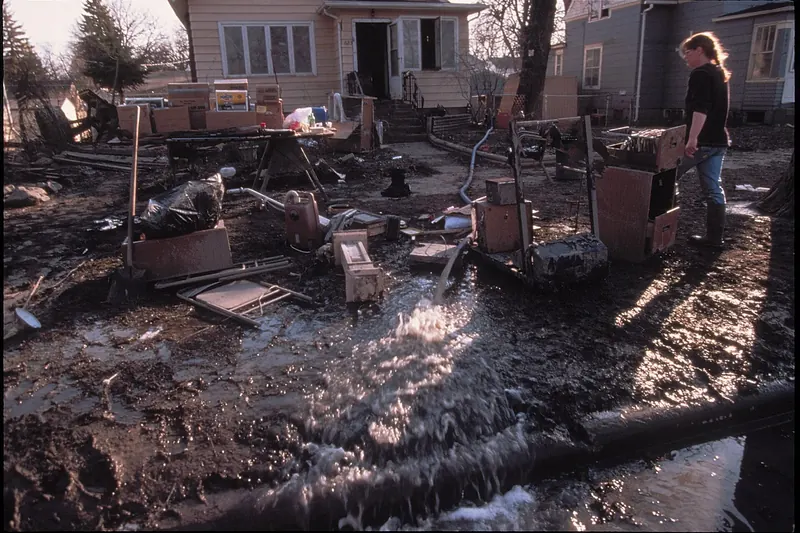
| Sewage, not just soapy water, in the floor drain | Main blockage or a surcharged sewer | Stop using water and read the backup pages |
Pipe size matters too. In WSSC territory, the washer's trap and fixture drain must be at least 2 inches, and the washer has to drain through an air break into a standpipe or a laundry sink. An older, narrower setup can struggle with a modern pump-out even with no clog at all.
So does the hose. GE's installation sheet for one of its commercial-laundry washers says the standpipe must accept 16 gallons per minute, and it warns against sealing the hose tightly into the pipe, because a snug fit can start a siphon. Leave air around the hose.
What should we do right now?
When the floor drain overflows during a wash
- Stop the washer and close its hot and cold shutoff valves.
- Hold off on showers, flushing and dishes until the floor drain empties.
- Unplug the washer only if the floor around it and the outlet are dry.
- Put on gloves, mop up, and disinfect the floor if anything but clean rinse water came up.
- Check that the drain hose isn't jammed tight in the standpipe.
- Book a drain cleaner or plumber to clear the line.
Who clears the line, and who pays?
In Montgomery and Prince George's counties, anyone clearing drains for pay has to be registered with WSSC, and only a registered plumber can report a blockage to WSSC. Homeowners may snake their own line. The drains inside the house are yours; for where that ends, see the owner-versus-utility split.
If the clog keeps returning, ask the drain cleaner what came out and how far down it was.
Does gurgling mean the same thing?
Often it's the early sign. Drains that gurgle when someone flushes are pulling air through a trap, which happens with a vent problem or a narrowing downstream. A floor drain that gurgles during the spin cycle and then overflows a few weeks later is a clog growing in plain view. If it starts to smell instead, see why a floor drain smells like sewer.
The bottom line
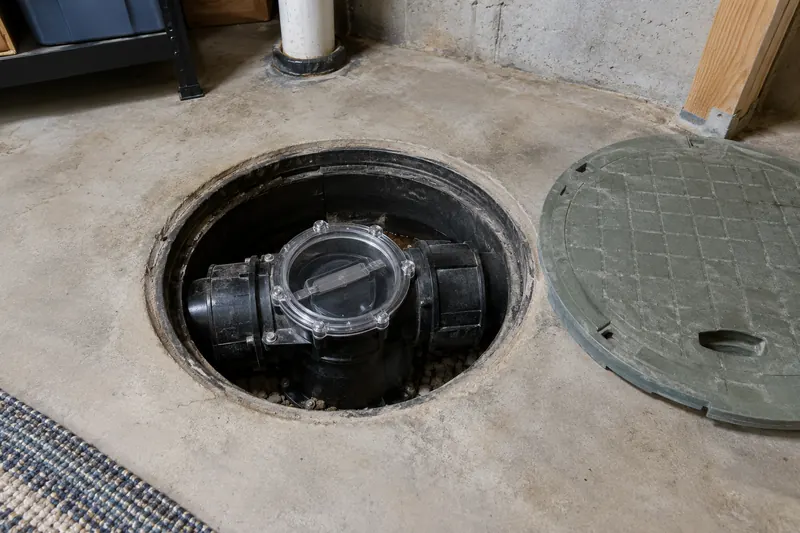
The floor drain overflows because it's the lowest opening on a line that can't keep up with the washer's surge. Stop the wash, close the valves, and get the line cleared before it turns into a sewage backup. If your basement has taken water back from the street before, ask about a backwater valve as well.
Readers also ask
Can the washer hose just go into the floor drain?
Not in WSSC territory. The code there says a clothes washer drains through an air break into a standpipe or laundry sink, which also keeps the floor drain free for spills.
Why does it only happen during the spin cycle?
That's when the washer pumps out its water fast. A partly blocked line can handle a slow trickle but not a surge, so the floor drain fills from below.
Is the water that came up dangerous?
If it came from the shared drain line, it may carry sewage. Wear gloves, clean, then disinfect with the method in our sewage cleanup guide.
Should the hose go all the way down the standpipe?
Not as a tight fit. GE warns that sealing the hose into the standpipe can start a siphon, so leave room for air around it.
Do we need a bigger standpipe?
Maybe. WSSC's code sets a 2-inch minimum for the washer's trap and fixture drain, so an older, smaller setup is worth having a plumber look at.