A pipe in the basement froze. How do we thaw it safely?
Answered by the column’s editors · · about 5 minutes to read
To thaw frozen pipes safely, open the nearest cold faucet, then warm the pipe slowly with a hair dryer, heating pad or hot towels until full pressure comes back. Never use an open flame of any kind.
Here's the short version: slow, gentle, electric heat, and a faucet left open so melting ice has somewhere to go. Patience matters more than power.
Before you start, find the main water shutoff and make sure it turns. A pipe that froze may already be cracked, and you won't know until water starts moving again.
How do you know a basement pipe is frozen?
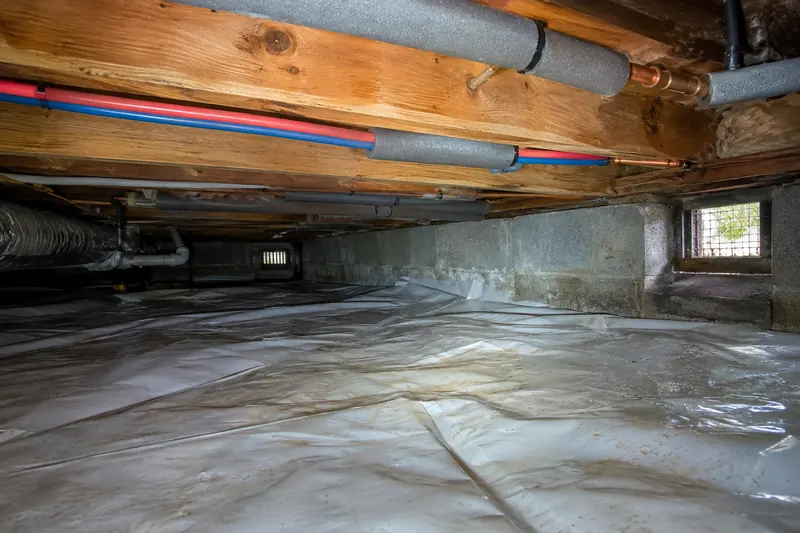
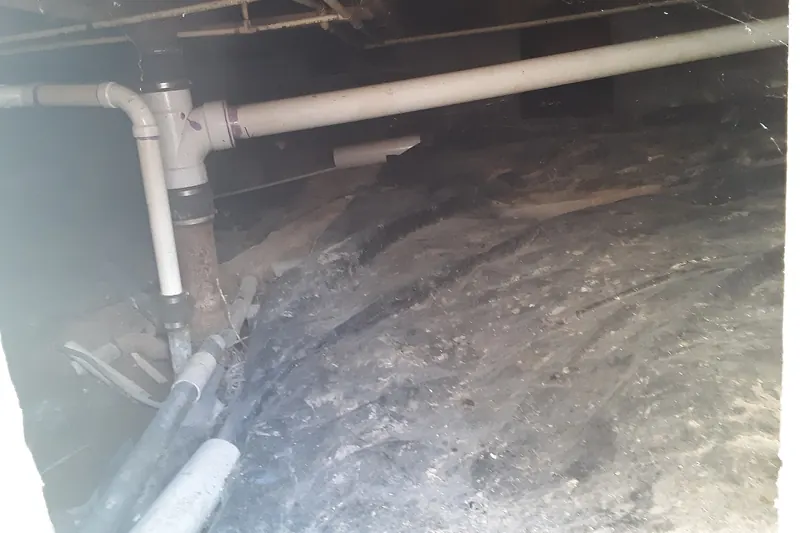
The giveaway is a faucet that gives you only a trickle, or nothing, on a cold morning. The American Red Cross (archived copy) says the likely spots are runs against exterior walls and the place where the water service comes in through the foundation. In a basement, think rim joists, window wells and corners far from the furnace.
Look for frost on the pipe or a section that feels much colder than the rest.
What's the safe way to warm it up?
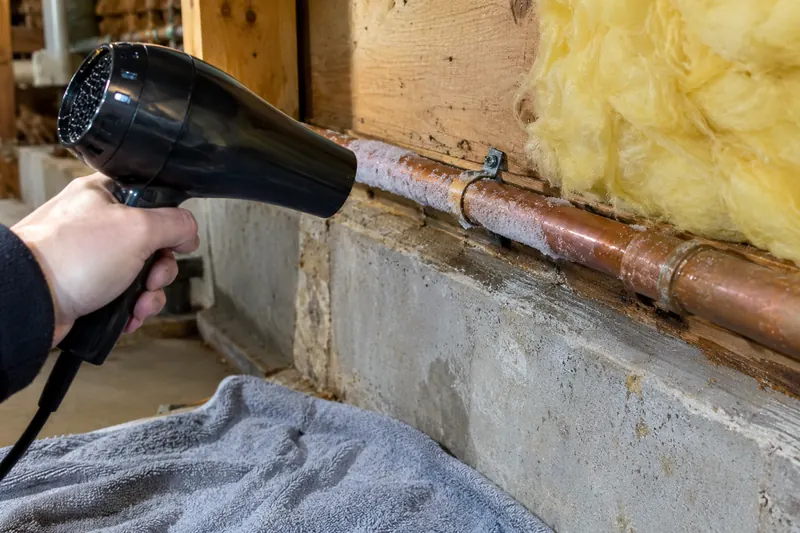
Open the cold-water faucet closest to the frozen section all the way. WSSC Water's winter page (archived copy) says this relieves pressure and lowers the chance the pipe breaks. Then apply heat with one of the tools on the Red Cross list: an electric heating pad wrapped around the pipe, a hand-held hair dryer, towels soaked in hot water, or a portable electric space heater kept well away from anything that can burn.
Keep heating until the faucet runs at full pressure. The City of Toronto, whose advice is written for a colder city than ours, says thawing can take one to six hours and that heating devices should never be left unattended. Stay with it.
Thawing a frozen basement pipe
- Locate the main shutoff and confirm you can close it quickly.
- Fully open the cold faucet nearest the frozen section.
- Warm the pipe with a hair dryer, heating pad or hot, wet towels.
- Stay in the room the whole time any heater or dryer is running.
- Keep heating until the faucet flows at full pressure.
- Check the other faucets in the house for more frozen lines.
| Method | Use it? | What to know |
|---|---|---|
| Hand-held hair dryer | Yes | WSSC's own suggestion; keep it moving along the pipe |
| Electric heating pad | Yes | Wrap it around the frozen section |
| Towels soaked in hot water | Yes | Slow, but no electricity near the pipe |
| Portable electric space heater | With care | Keep it clear of anything that burns, never unattended |
| Blowtorch, propane, kerosene, charcoal | Never | Red Cross rules out every open-flame device |
Why might the pipe burst only after it thaws?
Research from the University of Illinois Building Research Council (archived copy) found that once an ice plug forms, further freezing squeezes the water trapped between the ice and a closed faucet, and that pressure is what splits the pipe. The crack may sit a few feet from the ice, and it often stays sealed until thawing lets water flow through it.
That's why WSSC warns that a pipe may split and spray as it thaws, and why you want your hand near the shutoff. If water starts coming out of the wall or ceiling, close the main right away.
When should you call a plumber instead?
Call a licensed plumber if you can't find, reach or thaw the frozen section, as the Red Cross advises, or if the pipe has visibly split. For homes WSSC serves, its homeowner page (archived copy) says most plumbing projects need a WSSC-licensed plumber, and you can check a plumber's license before anyone starts.
One more WSSC detail worth knowing: if the water meter inside your house freezes, its customer FAQ (archived copy) puts the repair or replacement on the owner. A frozen outside meter is WSSC's job.
How do we stop it from freezing again?
Work out why that run froze: a draft through the rim joist, a cracked-open window, or pipe against bare block. Our page on what temperature pipes freeze at walks through the risk factors, and the crawlspace pipe guide covers insulation and heat cable.
If you add heat cable, buy a UL-listed product, follow the maker's instructions exactly, and plug it into a GFCI-protected outlet, as the Consumer Product Safety Commission advises. If there's no GFCI outlet nearby, have a licensed electrician install one. And before a winter trip, read what to do with the water when you're away.
The bottom line
Open the nearest cold faucet, warm the pipe gently with electric heat or hot towels, and stay with it until full pressure returns. Keep a hand near the main shutoff in case the pipe split. If you can't find, reach or thaw the frozen spot, or it's cracked, a licensed plumber takes it from there.
Readers also ask
Can we pour hot water down the drain to thaw a supply pipe?
No. Drains and supply lines are separate, so hot water in a drain does nothing for a frozen supply pipe. Wrap the supply pipe in hot, wet towels instead.
Should we turn the water off while we thaw the pipe?
Leave it on, with the nearest faucet open, so flowing water helps melt the ice. Close the main only if the pipe splits or starts leaking.
What if the frozen pipe is inside a finished ceiling?
Raise the heat in that room and open any access panel. If the pipe won't thaw, call a licensed plumber.
Will a frozen pipe always burst?
No. Many thaw without damage. The risk comes from pressure building between the ice and a closed faucet, which is why you open the faucet first.
Where this answer comes from
- Red Cross: how to prevent and thaw frozen pipes (archived copy)
- WSSC Water: winter pipe tips, #WinterReady (archived copy)
- City of Toronto: Prevent or Thaw Frozen Pipes
- WSSC Water: Information for Homeowners (archived copy)
- Illinois Building Research Council: report 96-1 on freezing and bursting pipes (archived copy)
- WSSC Water: FAQ on who fixes a frozen meter (archived copy)
- U.S. CPSC: CPSC Re-Issues Heat Tape Guidelines