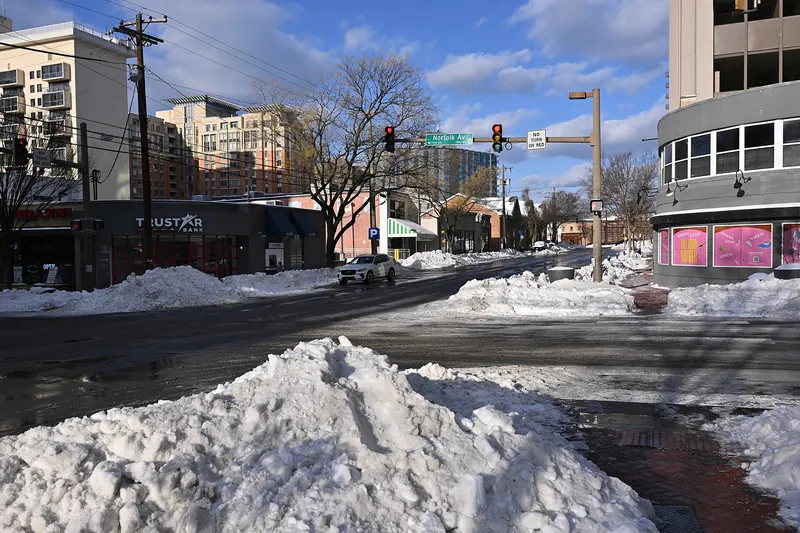
At what temperature do pipes freeze in a basement or crawlspace?
Answered by the column’s editors · · about 5 minutes to read
There's no single pipes-freezing temperature to watch on the weather app. Risk depends on how cold the air around the pipe gets, how long it stays that cold, and whether drafts or missing insulation let winter reach it.
Here's the thing about the outdoor reading: your pipes never feel it directly. A copper line in a heated basement can ride out a bitter week untouched, while a pipe in a drafty crawlspace can freeze on a night that seems merely cold. What counts is the temperature right at the pipe.
That's why we won't give you a magic outdoor number. Thresholds you see repeated online don't trace back to a primary source we could check. Risk factors do, and so does one useful indoor target.
Why isn't there one outdoor number for pipes freezing?
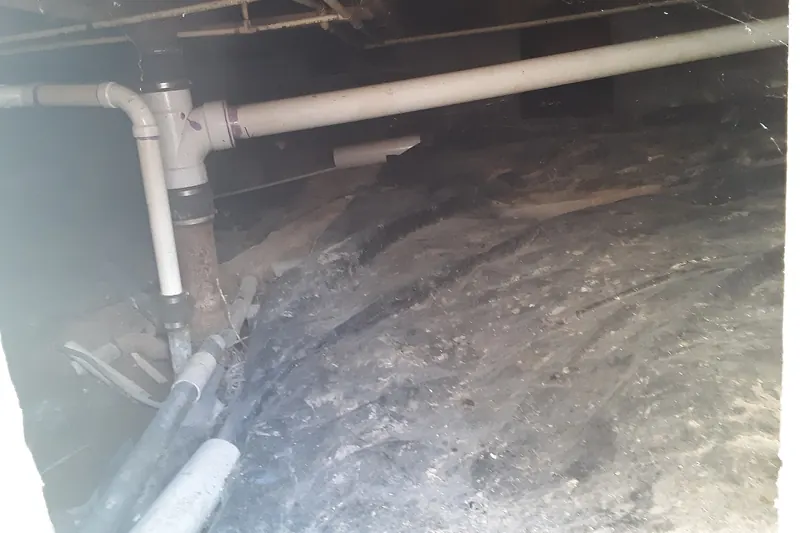
Because the pipe sits inside a house that loses heat at its own rate. Wind pushing cold air through a rim joist, a crawlspace vent left open, a run tucked against bare foundation block, or a faucet nobody uses for days all change how fast that pipe gets cold. A long cold snap matters more than a single frosty hour, since the space around the pipe keeps losing heat.
WSSC Water's winter guidance (archived copy) gives the target that actually helps: the space where meters and indoor pipes sit should stay at least 55°F. If a thermometer on the crawlspace floor or next to the basement rim joist reads well below that, those pipes are exposed, whatever the forecast says.
How cold do Maryland winters get at night?
Cold enough to matter. NOAA's 1991–2020 climate normals put the average January low below freezing at all three big airports serving our area, and January is the coldest month at each. Those are averages; individual nights run colder, and a run of them is what freezes pipes.
Chart drawn from: NOAA NCEI U.S. Climate Normals
Notice the spread. Reagan National sits beside the Potomac, close to the city; BWI and Dulles are farther out and average about five degrees colder. If your house is well outside the Beltway, the colder two are probably the better guide.
Which basement and crawlspace pipes freeze first?
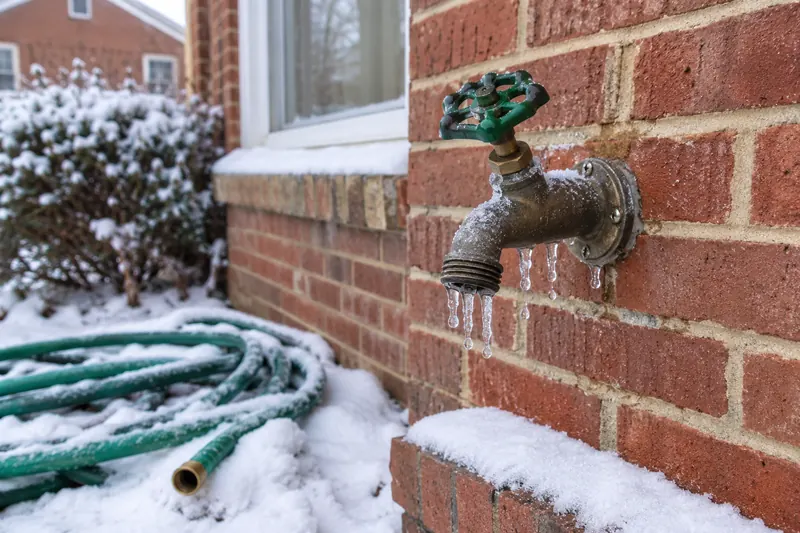
The American Red Cross (archived copy) lists the usual suspects: pipes in unheated basements and crawl spaces, garages and kitchen cabinets, pipes along exterior walls with little insulation, and outdoor hose bibs. It also names the spot where the water service comes through the foundation.
In our area the code tries to keep pipes away from cold in the first place. WSSC's current plumbing code (archived copy) calls for at least R-24 insulation on the cold side of water piping in exterior walls, ceilings and unprotected floor spaces, and puts exterior water lines at least 30 inches below final grade. Older homes, additions and DIY runs don't always meet that.
| Factor | Raises the risk | Lowers the risk |
|---|---|---|
| Location | Crawlspace, garage, exterior wall | Interior wall in heated space |
| Air movement | Open vents, gaps at the rim joist | Sealed openings, closed garage door |
| Insulation | Bare pipe, insulation on the warm side only | Insulation between pipe and the cold |
| Water movement | Line unused for days | Regular use, or a drip while you're home |
| Duration | Several cold nights in a row | A brief dip that ends by morning |
Why do pipes burst somewhere other than where the ice is?
This surprises people. A University of Illinois Building Research Council study (archived copy) found that bursting comes from an ice blockage that keeps growing and pressurizes the confined water beyond it, up to the nearest shut faucet. The ice itself may sit in a cold spot near the rim joist, while the split shows up farther along the line, in a warmer room.
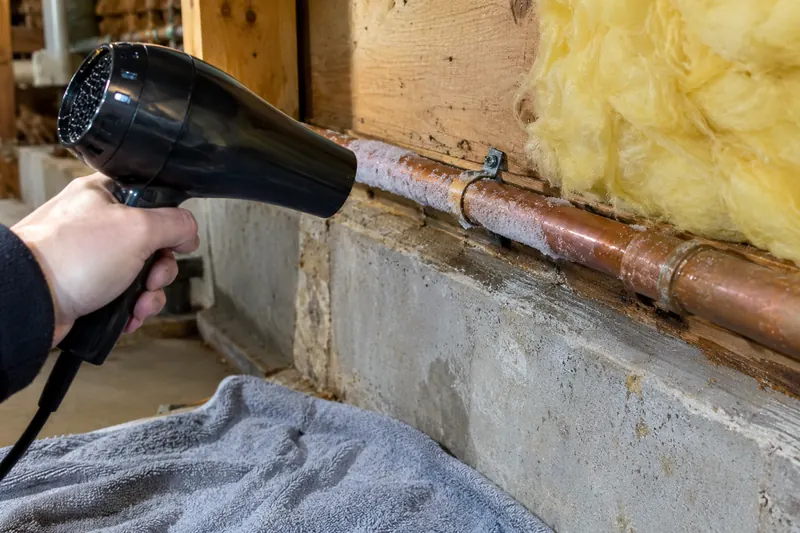
That's also why opening a faucet matters when a pipe is freezing or thawing: it gives that trapped water a way out. Our guide to thawing a frozen basement pipe covers the safe way to do it, and it never involves an open flame.
What should you do when a hard freeze is forecast?
Treat it as a checklist, not a guess about numbers.
Before a cold snap
- Put a thermometer near the coldest pipes and keep that space at 55°F or warmer.
- Close crawlspace vents and seal drafts at the rim joist and basement windows.
- Shut the inside valve to each outdoor faucet, remove hoses and drain the line.
- Open sink cabinet doors on exterior walls so room heat reaches the pipes.
- While you're home, let a faucet fed by exposed pipe drip.
- Learn where the main shutoff is and make sure it turns.
WSSC suggests the overnight drip only while someone's home, so plan differently for a trip; see our checklist for a winter trip. For pipes under the house, our crawlspace page covers insulation and heat cable, and the outdoor faucet page explains why a hose left on can wreck a frost-free faucet.
The bottom line
Forget the outdoor magic number. Watch the temperature where the pipes actually are, keep those spaces at 55°F or above, and fix the drafts and bare runs that let the cold in. On an average January night every major airport around us dips below freezing, so a pipe that's exposed will eventually get tested.
Readers also ask
Do pipes in a heated basement ever freeze?
They can, when they run along an exterior wall or rim joist that leaks cold air. Heat in the middle of the room doesn't help a pipe sitting in a draft against the foundation.
Does PEX freeze less easily than copper?
Any water line freezes if the water in it gets cold enough. Pipe material changes how it reacts to ice, not whether the water freezes.
Is a crawlspace colder than a basement?
Usually, because many crawlspaces are vented to the outdoors and have no heat supply. That's why Red Cross lists them among the likeliest places for frozen pipes.
Does the wind chill matter for pipes?
Wind chill describes how cold skin feels, not the air temperature. Wind does matter, though, when it pushes outdoor air through gaps onto pipes.
How do we know a pipe has frozen?
A faucet that gives only a trickle on a cold morning is the classic sign. Check pipes near exterior walls and where the water service enters the house.
Where this answer comes from
- NOAA NCEI: U.S. Climate Normals 1991–2020, monthly, DCA, BWI and IAD
- WSSC Water: Winter Ready page with the 55-degree target (archived copy)
- American Red Cross: which pipes freeze most often (archived copy)
- WSSC Water: plumbing code PDF in force since December 2025 (archived copy)
- University of Illinois: why water pipes burst, IDEALS record (archived copy)